African women in science: the long road to research

One year ago, we started working on our series “African women researchers”. From Cameroon to South Africa, from Congo-Brazzaville to Tanzania, many scientists have accepted to share their stories with us. We published six episodes in the first season. Six episodes highlighting the challenges, the fight, the joy, the work.
Republic of the Congo. Tanzania. Tunisia. South Africa. Cameroon. Here is a recap of the first season.
Introduction of our series “African women researchers “
Episode 1. Professor Francine Ntoumi and the passion for sciences
In Central Africa, women are underrepresented in research: 3.4% in Chad; 9.8% in Equatorial Guinea; 8.7% in the Democratic Republic of Congo compared to 12.8% in neighboring Congo.
A situation that alarms and mobilizes Professor Francine Ntoumi in Congo. The first African woman to take over the secretariat of the Multilateral Initiative on Malaria, this parasitologist campaigns for more women in research in Africa.
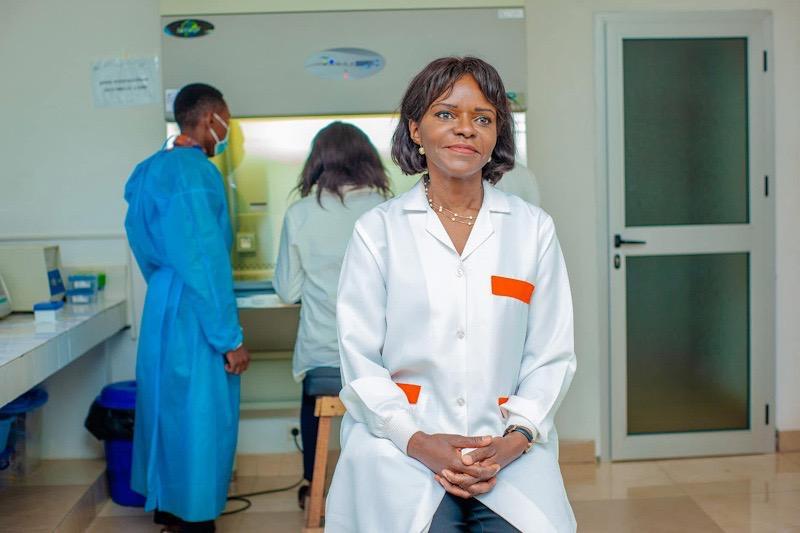
Through the Congolese Foundation for Medical Research that she founded in 2008, this professor of molecular epidemiology of infectious diseases at the University of Tubingen in Germany encourages and accompanies young girls in science through awareness and scholarships.
Episode 2. In Tanzania, Cesilia Mambile uses AI to predict forest-fire
Cesilia Mambile saw a computer for the first time of her life in their neighbours' house in 2001. She was thirteen years old. Every time, she will quietly sit and watch them operate it. Even if she couldn’t understand what they were doing, that particular machine was the beginning point of her passion for science.
Two decades later, Cesilia Mambile is now a researcher and lecturer from the university of Dodoma, Tanzania. She is currently pursuing her PhD in Information and communication science and engineering at the Nelson Mandela African institution of science and technology (NM-AIST), specialising in the use of artificial intelligence for environmental protection, particularly forest fire prediction.
She is also the founder and CEO of SmartEarth Solutions which focuses on developing AI-powered tools to address climate-related challenges in Africa. Cesilia Mambile believes that artificial intelligence can solve African problems.
Episode 3. In Tunisia, Dr Amira Kebir uses mathematics to save lives
In the small world of African mathematicians, specifically among young women scientists, she is a star. But Dr Amira Kebir is more than a role model. The 47-year-old Tunisian and professor of applied mathematics at the university of Tunis, is a passionate researcher who fully believes that mathematics is not just about numbers but a powerful language that can decode the complexities of the real world.
Dr Amira Kebir's work sits at the intersection of equations and public health, using mathematical models to fight infectious diseases. It has contributed to the adoption of the Cecolin human papillomavirus (HPV) vaccine in Tunisia, influenced Uganda’s national strategy on antimicrobial resistance, and has helped establish sustainable modeling ecosystems in Cameroon, Senegal, and Kenya.
“We translate complex simulations into clear, actionable advice for health ministries,” she said. ”For example, by modeling vaccination strategies, we can show that targeting a specific region or age group will yield 30% more protection than a broad approach. This means ministries can use their limited budgets and vaccines far more efficiently, ensuring the most vulnerable are protected first.”
In her research, her main goal is always to turn data into a life-saving strategy. Her recent studies are a mirror of her dedication.
Episode 4. Female Science Talents, a new platform for African women in science
Female Science Talents was launched in 2022 as a part of the Falling Walls Foundation's mission to promote female leadership and enhance the global recognition of “exceptional” women in science.
The initiative based in Germany offers a year-long Intensive Track for 20 women selected around the world and across all scientific disciplines. It provides close mentorship, intensive training, and networking opportunities with high-profile leaders.
”By increasing the visibility of female scientists and providing structured support, the program aims to help participants achieve significant career breakthroughs within a year,” said Julia Milbredt, head of programme at Female Science Talents. “Participants are given a platform at the annual Falling Walls Science Summit and Berlin Science Week to share their work and expand their networks internationally.”
Female Science Talents also addresses challenges faced by women in science, particularly in making transition from academia to industry and leadership roles. Participants are matched with mentors, engage in peer learning and coaching, and are encouraged to develop their own leadership strategies through workshops and online training.
Episode 5. In South Africa, Dr. Lindokuhle Nene fights cancer with nanotechnology
When Dr. Lindokuhle Nene was young, she used to watch TV shows about animal life, land and sea with her dad. “From there I wanted to be a marine biologist,“ she recalled “until I met one, and he asked me if I’m ready to live on a boat for the rest of my life.” She was then a 10-year-old little girl. She was scared.
She thought being a biotechnologist instead will just be fine. Her father also encouraged her, telling her she could become a doctor, not just a physician but an expert “of anything,” he insisted.
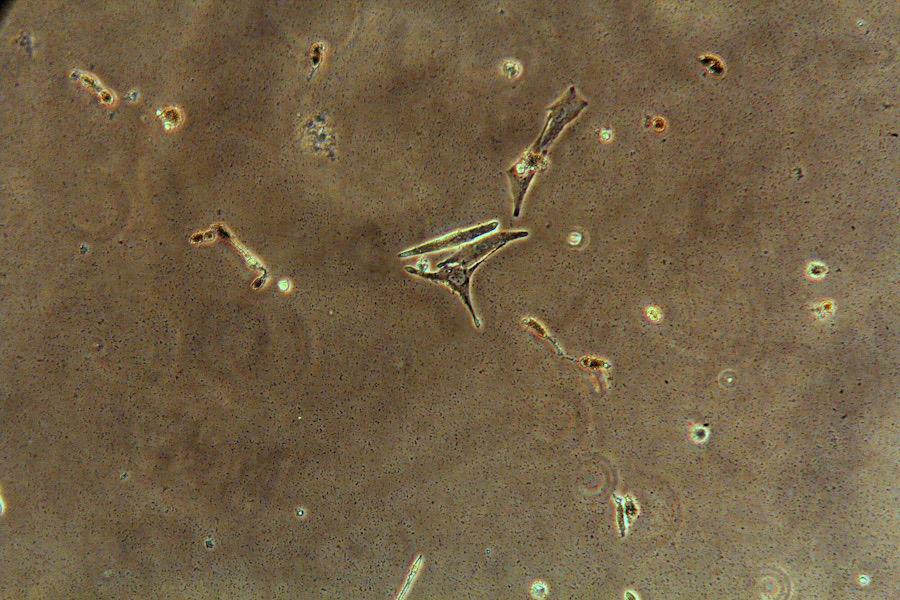
Skin cancer cells in a laboratory in UFV, Viçosa, Brazil. Image by Mateus Figueiredo via Wikimedia Commons.
At Rhodes University where she got her PhD, Dr. Lindokuhle Nene focused on the development of organic dye compounds and nanomaterials for cancer therapy.
Episode 6. Dr. Patricia Doumbe Belisse’s fight against Malaria
When Patricia Doumbe Belisse got her baccalaureate in Yaounde, the capital of Cameroon, her parents expected her to join a professional school so that she can become financially independent and take care of them and her siblings.
As the eldest child of a middle class family, it was then difficult for her to achieve her dreams. But the young Doumbe who initially wanted to become a medical doctor was determined. After twice being unsuccessful in medical school entrance exams, she enrolled in the Faculty of Sciences and discovered parasitology during her master’s program.
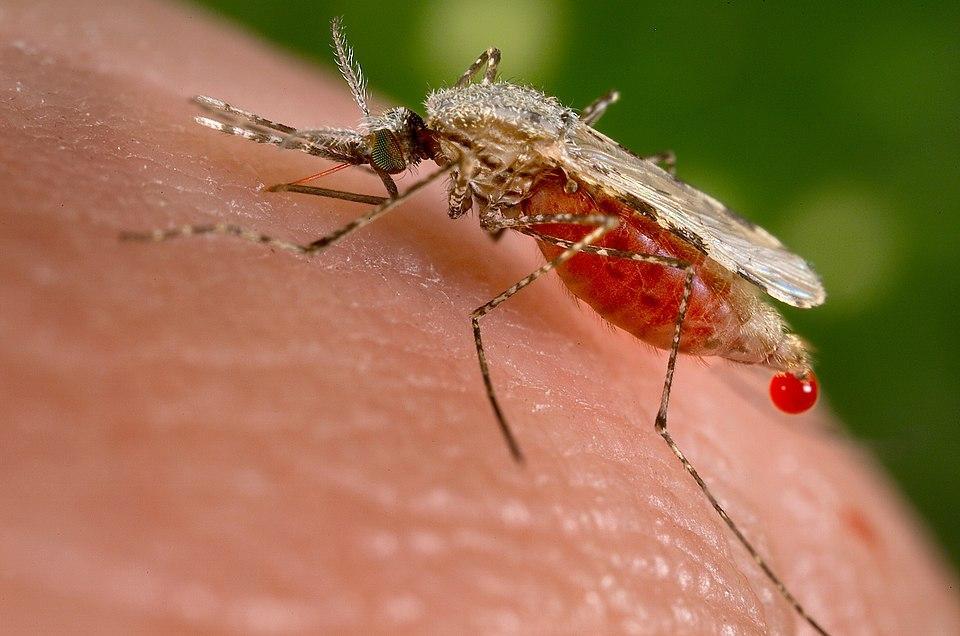
Anopheles stephensi by Centers for Desease Control and Prevention (CDC)
“Conducting research was challenging because I didn’t receive any support from them,” she recalls. “For instance, they didn’t understand why I needed to leave early and come back late, help with household activities occasionally. I didn’t receive any encouragement at all.”
Josiane Kouagheu