Dr. Patricia Doumbe Belisse’s fight against malaria

African women researchers. Episode 6. When Patricia Doumbe Belisse got her baccalaureate in Yaounde, the capital of Cameroon, her parents expected her to join a professional school so that she can become financially independent and take care of them and her siblings.
As the eldest child of a middle class family, it was then difficult for her to achieve her dreams. But the young Doumbe who initially wanted to become a medical doctor was determined. After twice being unsuccessful in medical school entrance exams, she enrolled in the Faculty of Sciences and discovered parasitology during her master’s program.
“Conducting research was challenging because I didn’t receive any support from them,” she recalls. “For instance, they didn’t understand why I need to leave early and come back late, help with household activities occasionally. I didn’t receive any encouragement at all.”
Patricia Doumbe Belisse became passionate about malaria and learned “to be resilient”. “There were times when my energy level was low, and I didn’t get the expected results in the lab or in the field.” She finally obtained her PhD in Parasitology and Ecology from the University of Yaounde I in Cameroon.
Introduction of our series African women in science
Dr. Patricia Doumbe Belisse is now a medical entomologist working as research associate in the vector biology department of the Liverpool School of tropical Medicine, UK. Her work focuses mainly on Malaria. From Cameroon to Ethiopia, she investigates the use of insecticides products to prevent or control mosquito nuisance, malaria transmission or prevention.
For Agripreneurs d’Afrique, Dr. Patricia Doumbe Belisse shares her story and how she is balancing her personal life with her busy work schedule.
A dream as a medical doctor. Then a redirection…
My path to research began with a redirection rather than a destination. Initially I dreamed of a career in medicine. After twice being unsuccessful in medical school entrance exams, I enrolled in the Faculty of Sciences. Passionate about human health, I discovered during my master's program a field that perfectly aligned with my interests in both science and public health: Parasitology. Seeking guidance from senior researchers about career prospects in parasitology and ecology, I chose to specialize in mosquito-borne diseases—a decision that would prove transformative.
During my master's fieldwork, I collected mosquitoes for testing their sensibility to different insecticides and I had the opportunity to engage directly with communities about malaria transmission and prevention strategies. The genuine interest and engagement I witnessed from community members was a pivotal moment.
Episode 1. Prof. Francine Ntoumi and the passion for sciences
I realized that while I might not be treating patients in a hospital, I could still make a meaningful impact on community health through research. From that point, I have been passionate about my research work and get motivation to move forward and obtain my PhD in the same field where I could develop my expertise and expand my impact on global health challenges.
Your parents wanted you to join a professional school, far away from research…
I am the eldest of a middle class family. My parents expected me to join a professional school after my baccalaureate so that I can become financially independent and take care of them and my siblings. Conducting research was challenging because I didn’t receive any support from them. For instance, they didn’t understand why I need to leave early and come back late, help with household activities occasionally. I didn’t receive any encouragement at all.
In addition to my motivation, my strength to move forward came from God. I was also fortunate to work in fully funded research projects otherwise with the family pressure and lack of financial resources, I would have quickly given up.
But you persevered. You obtained your PhD in Parasitology and Ecology from the University of Yaounde I in Cameroon. You are now a medical entomologist…
During my MSc and PhD years, I conducted my research activities at OCEAC (Organization for Coordination in the Fight Against Endemic Diseases in Central Africa), a central African research institute based in Yaounde, Cameroon. I have primarily worked in the field of malaria control. Malaria is a dynamic disease because the parasite and the vector continually change and develop adaptative strategies against antimalarial drugs and vector control measures.
During my master studies, I aimed to control malaria vectors by assessing the impact of insecticides, and tools used by communities to control local vectors in South Cameroon. For my PhD, I evaluated the effectiveness of a biolarvicide made of two bacteria for controlling urban malaria in Yaounde Cameroon.
Episode 2. Cesilia Mambile uses AI to prevent forest-fire in Tanzania
After defending my thesis, I joined the vector biology department at the Liverpool School of Tropical medicine to support the activities of the CEASE- Controlling the Emerging Anopheles stephensi in Sudan and Ethiopia-project as a research associate. In this role, I coordinate field work activities of PhD students which aim to control invasive malaria species in Ethiopia by using a product that prevent pupae from developing into adult mosquitoes.
Thus far, my works has mainly been focused on implementation research, collaborating with communities to evaluate the efficacy of various malaria control tools.
Episode 3. In Tunisia, Dr. Amira Kebir uses mathematics to save lives
I supported the entomological surveillance activities of the Cameroon National Malaria Control Program. I am passionate about equity in science that’s why I am part of several women’s organisation that promote the role of women in science.
As a woman, what was the most difficult thing for you personally and professionally? Did you have support from your superiors?
The most difficult thing was managing my time and balancing my personal life with my busy work schedule after I got married and became a mom. Yes, I did. I have flexible work hours. For example, I could work from home on Fridays or Mondays to extend my weekend and prepare the upcoming week.
How did you overcome the difficulties?
I learned to prioritize, delegate, and seek support from people around me. I also learned to stop feeling guilty when I do something for myself or my family or when I have a task to complete at work. I am still working on maintaining this mindset because sometimes I fail. It is a dynamic process.
Today, what is the biggest problem you face in your scientific career?
Learn to be resilient. This is an experience that other women scientists have had. However, it is important to remember that each of our contexts, stories, and situations are different.
The solution?
Support each other by sharing our experiences. It can boost morale, create safe spaces for communication, and help us improve things as a group. Remember, unity is strength.
Josiane Kouagheu
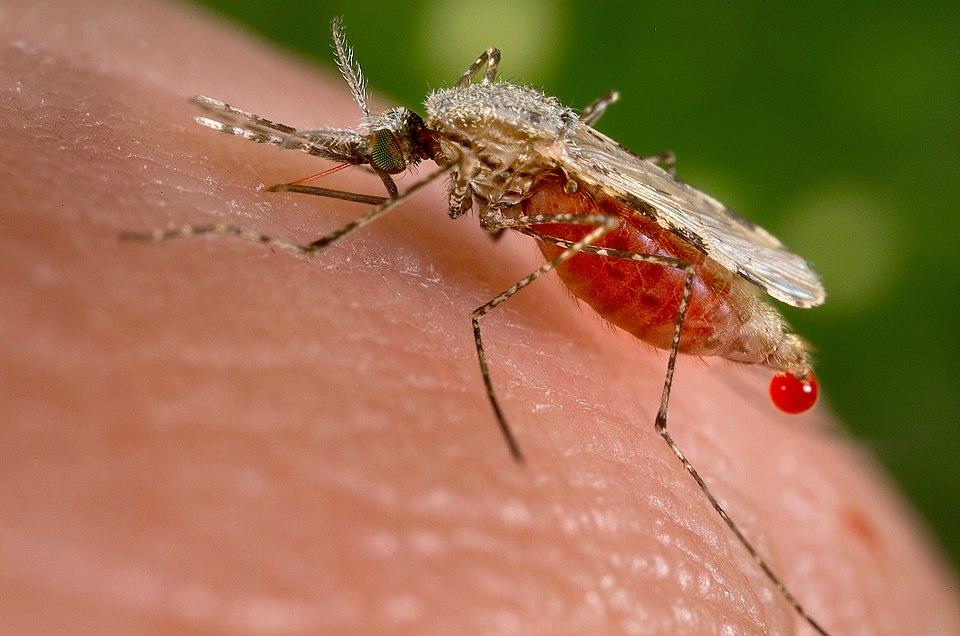
Banner image: Anopheles stephensi by Centers for Desease Control and Prevention (CDC)