In Tunisia, Dr Amira Kebir uses mathematics to save lives


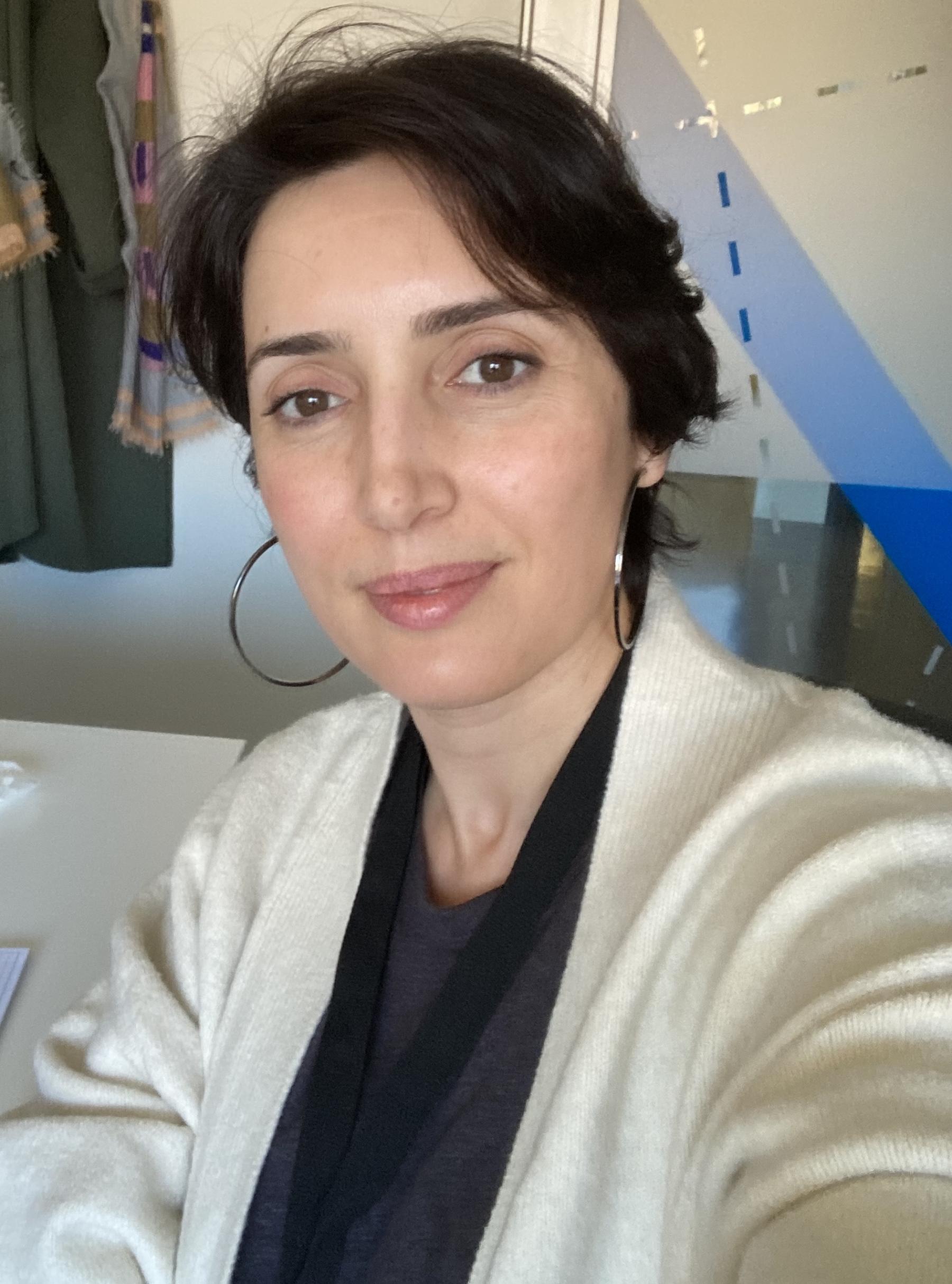
African women researchers. Episode 3. In the small world of African mathematicians, specifically among young women scientists, she is a star. But Dr Amira Kebir is more than a role model. The 47-year-old Tunisian and professor of applied mathematics at the university of Tunis, is a passionate researcher who fully believes that mathematics is not just about numbers but a powerful language that can decode the complexities of the real world.
Dr Amira Kebir's work sits at the intersection of equations and public health, using mathematical models to fight infectious diseases. It has contributed to the adoption of the Cecolin human papillomavirus (HPV) vaccine in Tunisia, influenced Uganda’s national strategy on antimicrobial resistance, and has helped establish sustainable modeling ecosystems in Cameroon, Senegal, and Kenya.
“We translate complex simulations into clear, actionable advice for health ministries,” she said. ”For example, by modeling vaccination strategies, we can show that targeting a specific region or age group will yield 30% more protection than a broad approach. This means ministries can use their limited budgets and vaccines far more efficiently, ensuring the most vulnerable are protected first.”
In her research, her main goal is always to turn data into a life-saving strategy. Her recent studies are a mirror of her dedication. For instance, with other researchers, Dr Amira Kebir evaluated, with mathematical models, the health and economic impacts of HPV vaccination for 12-year-old girls in Tunisia, considering various vaccine options (Cecolin, Cervarix, Gardasil, 4, and Gardasil-9), their costs and cost-effectiveness. Cervical cancer is primarily caused by human papillomavirus infection.
Introduction of our series “African women researchers”
They used the Univac and Prime models. The Univac model uses United Nations (2019 revision) population estimates and evaluates catch-up campaigns, stratified cervical cancer cases by stage, and hospitalizations, while the Prime model focuses on the cost-effectiveness of vaccinating females before sexual debut, utilizing country-specific data and customizable inputs.
As central estimates, Dr Amira Kebir and the team assumed a single-dose administration for each vaccine and evaluated the impact of HPV vaccination for a single cohort of 12-year-old girls in 2025, assigning protection rates of 90%–98% against genotypes directly targeted by the vaccines. In conclusion, they estimated that Cecolin is the most cost-effective HPV vaccine in Tunisia, particularly when cross-protection is considered.
The Tunisian government followed and adopted their results. “Our models don't just show that vaccination works; they demonstrate how to do it most effectively,” Kebir said. For Agripreneurs d’Afrique, the associate researcher at the Pasteur institute of Tunis and member of the World Health Organization Collaboratory technical advisory group shares her experience and how she is empowering young women scientists in Africa.
Agripreneurs d’Afrique: it all started when you realized that mathematics is not just about numbers…
Dr Amira Kebir: it began with a pure appreciation for the beauty of abstract reasoning, the elegance of a perfect solution to a complex problem. But my passion truly found its purpose when I realized that mathematics is not just about numbers (X); it is a powerful language that can decode the complexities of the real world. The pivotal moment was understanding that I could use this tool to model diseases, to simulate outbreaks, and to guide policies that save lives. That fusion of abstract beauty and tangible human impact is what fuels my research.
A girl with a passion for mathematics. Did your family understand and encourage you?
I was incredibly fortunate. As the eldest of four, with three younger brothers, I never felt my path was limited by being a girl. My parents trusted my judgment completely. They saw my determination and encouraged my curiosity, even if the world of advanced mathematics was unfamiliar to them. My brothers saw me as a reference point, a source of pride. That unwavering foundation of belief was my greatest privilege. It gave me the confidence to pursue this demanding field without ever doubting that I belonged here.
You then followed your passion and became Dr Amira Kebir…
My journey started at the University of Tunis el Manar. I pursued a PhD in applied mathematics through a collaboration between Tunisia and Morocco, beginning my research in mathematical ecology. I quickly became drawn to the urgent challenges in public health, and my focus shifted to epidemiology.
Fellowships like the Fulbright award in the USA and the Science by women fellowship in Spain were crucial, allowing me to build international collaborations and bring that knowledge back home. But the heart of my career has been building capacity here in Africa. I lead the African Modeling and Analytics Academy for Women (AMAX), which is creating an Africa-led, gender-intentional network to support health decision-making.
Episode 1. Professor Francine Ntoumi and the passion for sciences
The tangible outcomes are what matter most: our work contributed to the adoption of the Cecolin HPV vaccine in Tunisia, influenced Uganda’s national strategy on antimicrobial resistance, and has helped establish sustainable modeling ecosystems in Cameroon, Senegal, and Kenya. We train Phd students, run workshops, and build tools to ensure African experts are leading the response to African health challenges. Recently, I was appointed to the WHO Collaboratory Technical Advisory Group, where I can contribute this perspective to global epidemic preparedness.
Your work focuses on the application of mathematical and computational models. Can you explain what it means?
In essence, we use mathematics as a "digital testbed" or a virtual reality for diseases. We create computer simulations that use real data to mimic how a disease like COVID-19 or HPV spreads through a population. This allows us to ask critical questions: "What if we vaccinate teenage girls first?" or "How can we distribute a limited number of doses to prevent the most deaths?" We can test these scenarios safely and cheaply on a computer to find the most effective strategy before a single real-world resource is committed.
Concretely, how do you help local populations with your research?
We translate complex simulations into clear, actionable advice for health ministries. For example, by modeling vaccination strategies, we can show that targeting a specific region or age group will yield 30% more protection than a broad approach. This means ministries can use their limited budgets and vaccines far more efficiently, ensuring the most vulnerable are protected first. Our work turns data into a life-saving strategy.
You worked on the development and expansion of Repair X, a decision tool for deploying vaccinations efforts in the context of Covid-19 in African countries such as Cameroon, Madagascar, Tunisia and Senegal. Did the tool really help the population?
Absolutely. RepairX was designed to address the critical challenge of equitable vaccine deployment during the COVID-19 pandemic in Africa. For countries like Tunisia, Senegal, Madagascar, and Cameroon, it provided tailored scenarios that helped governments prioritize delivery. The key result was moving the strategy from "first-come, first-served" to a data-driven approach that identified priority groups and regions to maximize the impact on transmission.
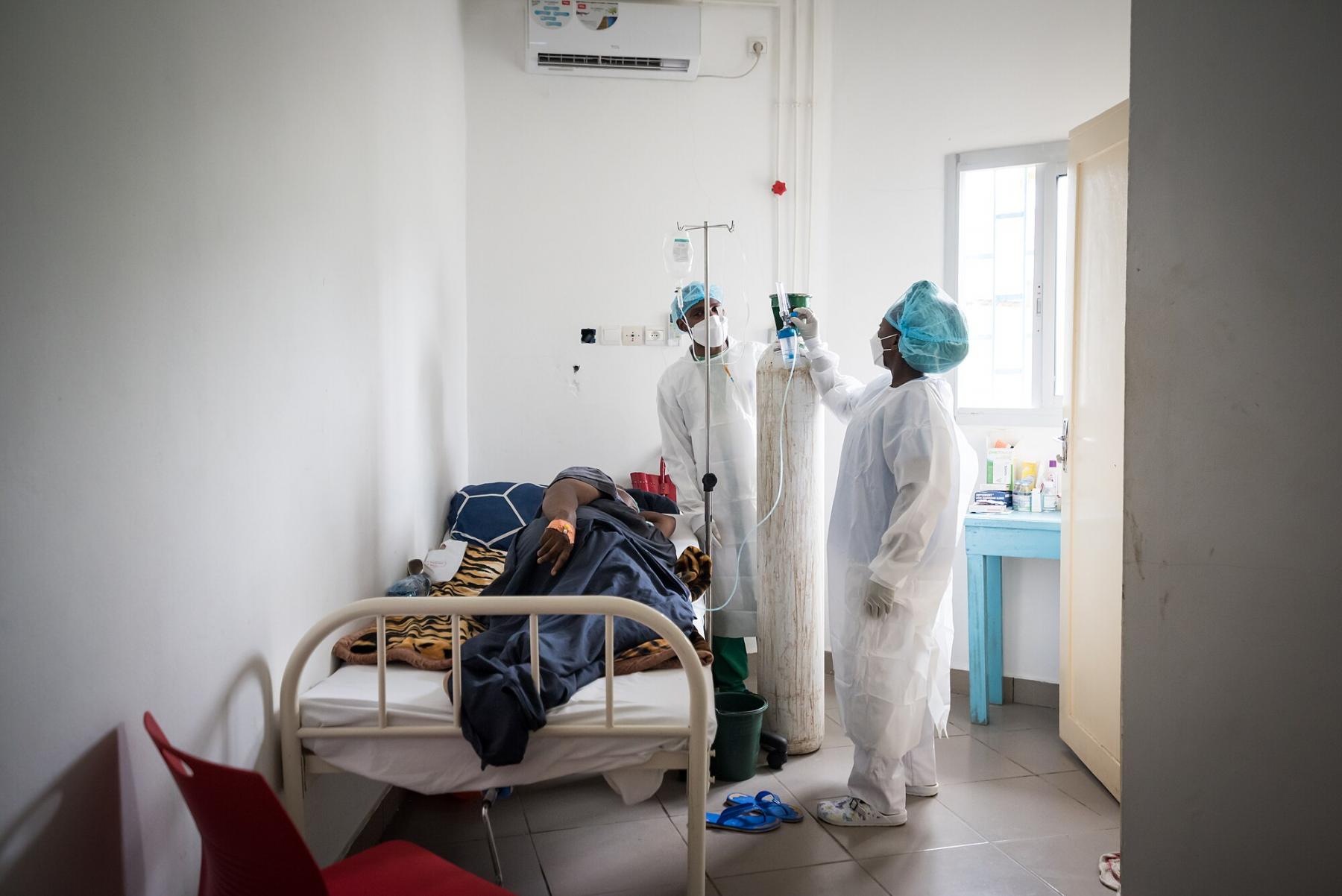
Concretely, this meant governments could optimize their rollout plans, adapt to situations where many people had already been infected, and ensure that limited doses went where they would save the most lives, reduce the burden on hospitals, and protect the most vulnerable communities faster.
Can this kind of tools help to eradicate diseases like hepatitis B or human papillomavirus ?
Eradication is the ultimate goal, and modeling is the essential roadmap to get there. For HPV, which causes cervical cancer, our models don't just show that vaccination works; they demonstrate how to do it most effectively. For instance, our recent studies in Tunisia provided evidence for both the health benefits and the cost-effectiveness of the national HPV vaccination program. This gives governments the confidence to invest in and sustain these programs, showing them that with a precise strategy, we can eliminate cervical cancer within a generation.
As a woman and mathematician, what is the most difficult thing for you?
The biggest challenge, even today, is visibility and recognition in a field that is still male-dominated. There can be an unspoken expectation that women must prove themselves more, that our voices must be louder to be heard. I overcame this through sheer persistence, resilience, and the crucial support of mentors who championed my work. Now, I find strength in building communities of women scientists. We support each other, share opportunities, and amplify each other's voices.
How did you help other young women researchers to overcome their problems?
Mentorship is at the core of my mission. Through the AMAX project, we are specifically creating opportunities for women across Africa to develop expertise in modeling and analytics. I actually supervise three PhD students. But beyond training, it's about representation. When a young woman sees someone who looks like her leading a research group, advising the WHO, and making a real impact, it shatters the illusion that this space isn't for her. I am that example for them, just as I had my own examples.
In conclusion, if we want stronger health systems in Africa, we must ensure the health of women…
A profound turning point in my career has been integrating a gender lens directly into my mathematical models. Diseases impact women differently, not just biologically, but due to societal inequalities in access to care, information, and vaccines. I am now dedicated to building models that explicitly account for these gender-specific vulnerabilities.
Episode 2. In Tanzania, Cesilia Mambile uses AI to predict Forest-fire
My goal is to create decision-support tools that highlight the needs of women and girls, ensuring health policies are not just effective, but equitable. This is more than science; it is about justice. If we want stronger health systems in Africa, we must ensure that the health of women who are so often the backbone of our communities, is prioritized and backed by rigorous evidence.
Josiane Kouagheu