In Morocco, Prof. Nadia Raïssi uses mathematics to solve fisheries’ problems

African women researchers. Season 2. Episode 3. Rabat, Morocco. Descartes high school. Early seventies. Nadia Raissi is passionate about mathematics and her teachers have already detected her interest.
“I found my calling when I was 13, since that is when I decided to become a [mathematics] teacher,” recalls Raïssi, Professor of mathematics, to Agripreneurs d’Afrique.
“At that time, without knowing what research was about, I was continually questioning life, always seeing things from a scientific perspective, and using numbers to understand and solve matters.”
Discover the first season of our series.
Coming from a family of four daughters, her parents always encouraged her to pursue studies that would enable her to assert her independence in a “still-patriarchal society”.
“I became interested in mathematics to demonstrate that women are fully capable of succeeding in a male-dominated discipline,” Raïssi says.
“Great influence”
After her bachelor degree in fundamental mathematics at the University of Mohamed V, she immediately flew to Montreal to continue her studies. In June 1983, she obtained her MSc with work on ordinary differential equation theory, an equation that involves an unknown function, its independent variable, and one or more of its derivatives.
“Eager for more maths“, Nadia Raïssi registered for a PhD program and one day, she attended a lecture, an “ amazing opportunity”, that will have a “great influence” on her “whole career”.
Francis Clarke, the renowned mathematician known for his contributions to nonsmooth analysis (a term that is due to him), an area of mathematical analysis that studies functions and optimization problems that are not differentiable, was presenting his findings in the calculus of variations.
“This field was a perfect compromise between fundamental and applied mathematics, since the development of its conceptual framework is motivated by actual conundrums in several other disciplines, economics and biology among others,” she says.
In 1987, she got her PhD under the supervision of the famous Professor Clarke, with a thesis on Value function in optimization. After her graduation, Raïssi decided to go back to Morocco to teach and pursue her research at Ibn Tofail University, which was established in 1989.
There, she dedicated 22 years of her life to various projects. “I have faced so many challenges and dedicated myself to succeeding in projects near and dear to my heart, among which, the creation of bachelors, masters and doctoral programs in mathematics,” the mathematician says.
For Raïssi, mentoring and transmitting knowledge are an essential part of a researcher's role. “My students even gave themselves the name ‘the Raïssi family’, which reflects the close relationship and sense of community that developed among us,” she says.
“Fascinated by mathematics”
“I sometimes felt that I was not only their supervisor, but also a little bit like a scientific mother to them. All my former PhD students are now researchers, and became my partners, those I am particularly proud of.”
When Dr. Mustapha Serhani met Raissi for the first time during an oral interview for his exam, he discovered an “elegant, charismatic woman, fascinated by mathematics” who would later teach him and his classmates, “with all her grace”, the course on optimization and optimal control.
During his thesis under the supervision of Nadia Raissi, she invited him and others to her home to work and he discovered “a very humble person, who did not hesitate to take care of us”: “that really left a mark on me.”
“Professor Nadia Raïssi’s work is impressive because she works in a very fundamental area of mathematics, nonsmooth analysis and the associated optimal control,” Serhani told Agripreneurs d’Afrique.
“But she has managed to link it to applied mathematics and modeling in biomathematics, medicine, ecology, and economics. This blend of fundamental and applied gives an extraordinary flavor to what she does, like combining salty and sweet in a gastronomic dish.”
Serhani was Professor Nadia Raïssi’s first doctoral student. During his doctoral years, he was “a bit” worried about working on a topic combining fundamental and applied, since he was more drawn to theory.
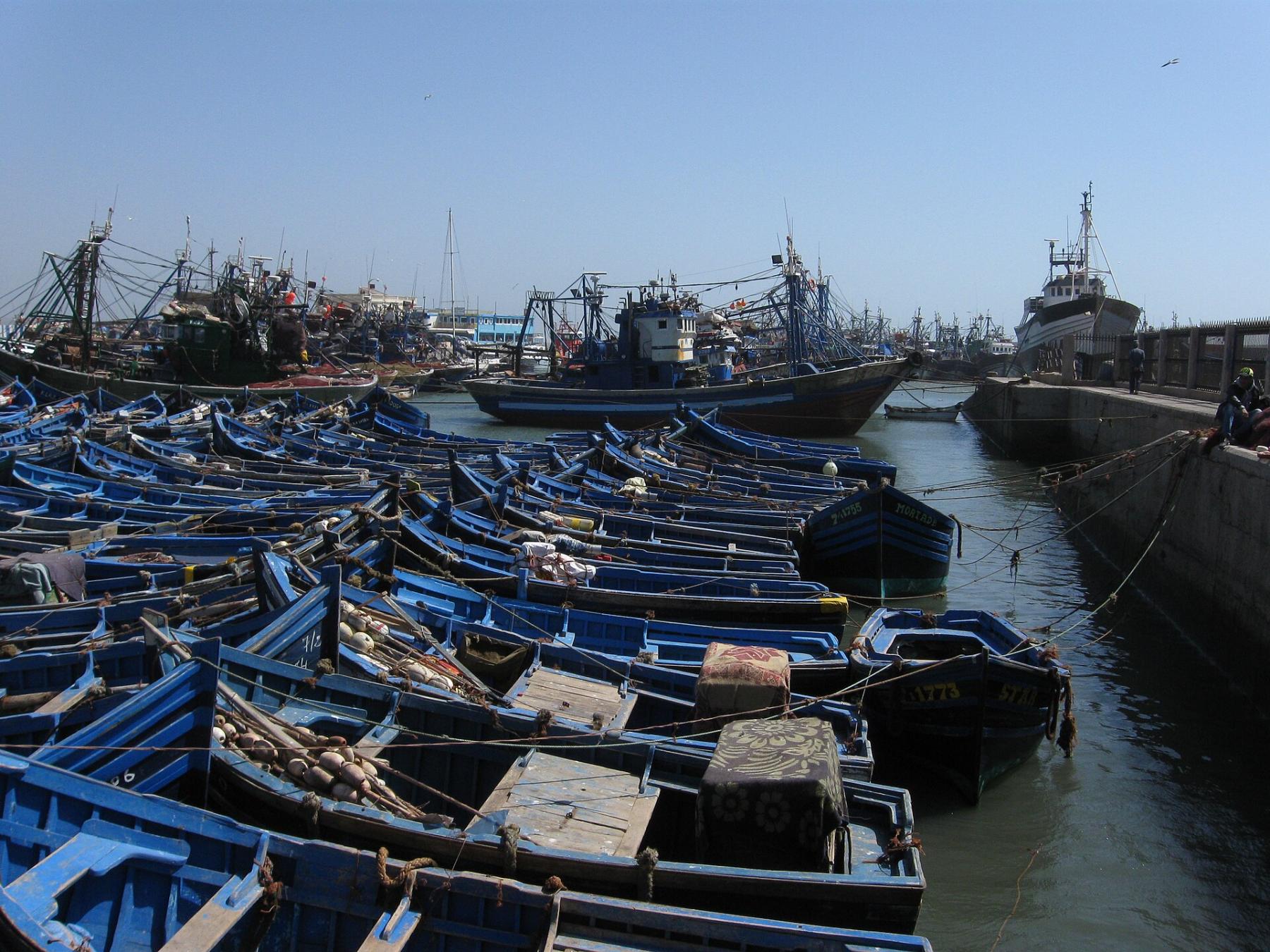
Fishing boats aligned in the port of Essaouira. Photo by Adrian Dobre via Wikimedia Commons.
But Raïssi managed to draw him toward the applied while keeping the main work fundamental, he recalled describing the process like “a very beautiful experience, which led to work in fundamental optimal control and in modeling in bioeconomics and ecology”.
“Sweet-and-salty mix”
“Before meeting Nadia, I intended to do a fundamental thesis. With Nadia, I learned to love the ‘sweet-and- salty mix’ : fundamental-applied.”
“I learned with Nadia that hard work always pays off, even if you go through difficult times; that you must never let up; that you must seek other horizons without abandoning your identity; that you must reconcile scientific research and social activities; and above all, I learned to work in a group,” Serhani said.
Today, he is a professor-researcher in optimal control and nonsmooth analysis. He is also the colleague of his former supervisor and “eternal” collaborator with many projects to carry out in the future and doctoral students to supervise together.
“He is a brilliant researcher and has become one of my closest scientific collaborators,” Raïssi appreciates.
She always taught her students like Serhani that academic research should not remain disconnected from real-world problems.
For her, mathematics provides a framework for understanding complex real-world systems and supporting decisions.
“One of the major challenges I faced, together with some colleagues, was to find ways of orienting mathematical research towards concrete sustainability issues,” she explains.
Passionate about the sea, she became involved in fisheries management and quickly identified the need of mathematical modeling to provide a bridge between ecological and economic issues in the management of natural resources.
In response to development imperatives in Morocco that required (when she came back after her PhD) “unique momentum, unleashing all dynamic forces in the country”, Nadia Raïssi even oriented her research on applied mathematics.
Mathematics can improve life
Her studies focused for example on developing mathematical models to convert household waste into energy or solve fisheries management issues.
“We developed mathematical models that allowed us to identify management strategies capable of maximizing energy (methane) production while using waste as a resource,” Raïssi says.
For the scientist, mathematics is not only a succession of numbers and theories as many human beings believe. It is a tool that can improve and save life. She is a specialist in control theory.
In one of her articles with her team in fishery for instance, one of her favorite fields of application, she uses a modeling approach to test and compare the effectiveness of different fisheries management measures on stock status and sustainability.
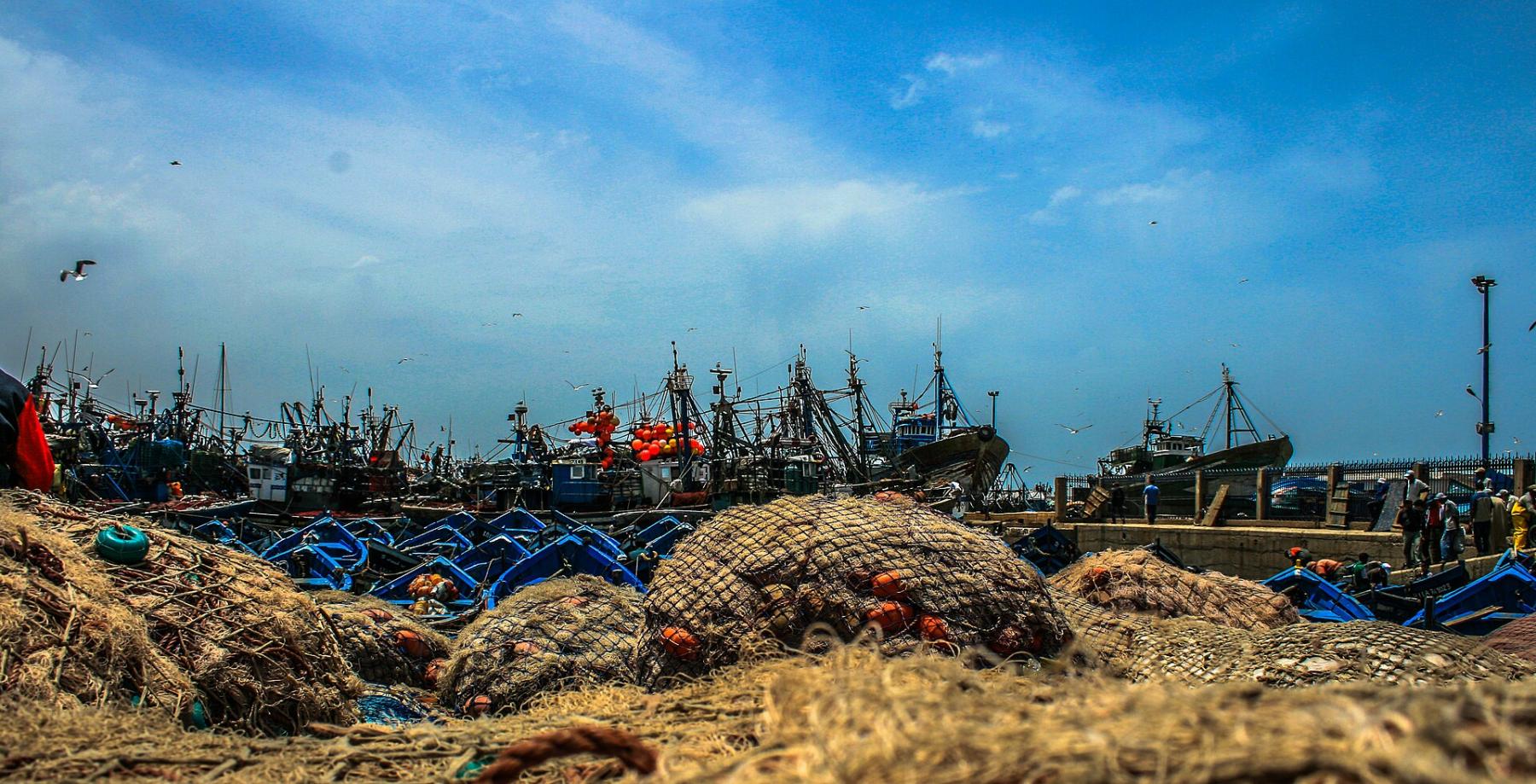
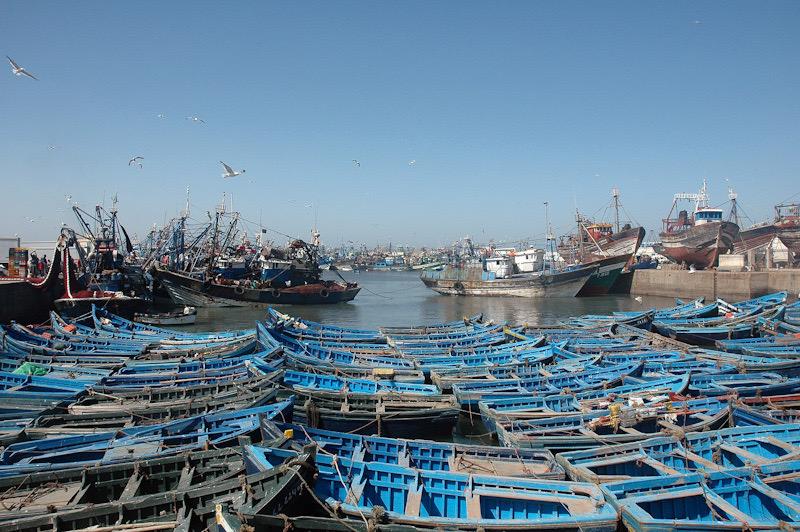
Port of Essaouira. Photo by Brahim Faraji via Wikimedia Commons.
“Our models were validated against observational data, including datasets provided by the FAO,” the researcher told Agripreneurs d’Afrique. “The objective of this research was to guide reflection on stock management, leaving decision-makers responsible for implementing best practices and providing recommendations to fishers.”
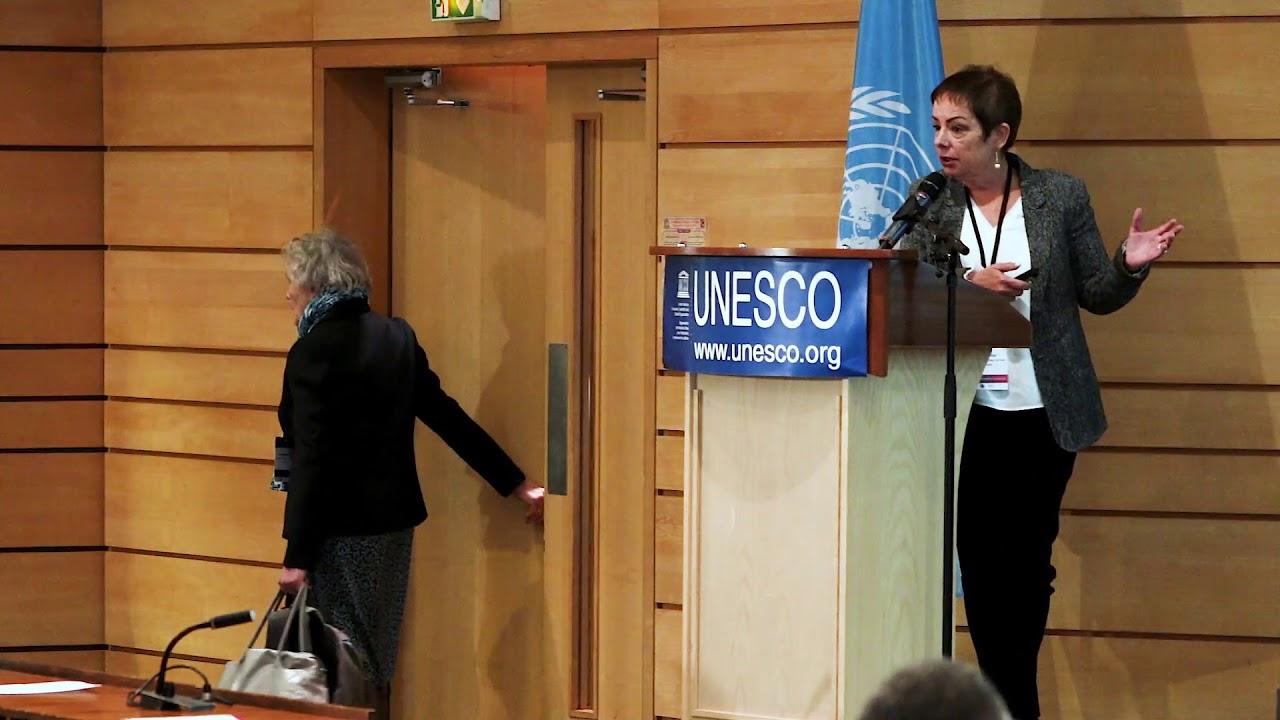
In an article published in 2022 in the United Nations Educational, Scientific and Cultural Organization (UNESCO) report named “Mathematics for action”, Nadia Raïssi emphasized the fact that mathematical models have allowed a better understanding of the dynamics of fisheries systems on an ecosystem scale.
For her, by coupling ecological and economic dynamics, mathematical modeling makes it “possible to develop tools that enable managers and decision makers to sustainably harvest these resources”. It then allows fisheries managers to assess fish stocks and devise management plans that optimize fisheries for maximum gains while preserving the resource.
According to Raïssi, many traditional models, still widely used today, are simple, static, and often single species-focused. But newer integrated modeling approaches recognize fisheries as complex socio-ecological systems with multiple stakeholders.
Real-world problem
“These dynamic models capture the economic, social, and ecological drivers of fisheries, and promise improved support for sustainable fisheries management and decision-making,” she wrote.
That ability of connecting “rigorous mathematics with practical and meaningful problems”, is what impresses Dr. Achraf Bouhmady, a postdoctoral researcher at Africa Business School, Mohammed VI Polytechnic University in Morocco.
“She has a strong mathematical background, but she never loses sight of the purpose of mathematics,” he told Agripreneurs d’Afrique. “She encourages us to ask not only whether a mathematical model is correct, but also what the model tells us about a real decision or a real-world problem.”
Bouhmady's research focuses on optimal control, Hamilton-Jacobi-Bellman equations, mathematical modeling, data-driven decision systems and machine learning, with applications to industrial, economic and sustainable systems.
Professor Nadia Raïssi taught him Control Theory during his Master's degree in Analysis and Applications at Mohammed V University in Rabat.
At that time, he was looking for a way to make mathematics “more concrete and useful”, and her teaching showed him that “mathematics could be much more than abstract theory” and could be a tool for understanding and solving real problems.
“I remember thinking that this was exactly the direction I wanted to take: applied mathematics,” Bouhmady remembers adding that he was “immediately” impressed by the way Raïssi connected mathematical concepts to real-life problems.
During his PhD program, Raïssi who was his professor and supervisor— he obtained a PhD in Applied Mathematics —taught him the importance of research, facilitated connections with other research communities and even recommended him to Professor Hassna Zidani, which led to his research experience at INSA Rouen Normandy in France.
“Major impact”
She also encouraged him to develop his own research ideas “much more than mathematical techniques.”
“Scientifically, she taught me how to approach a research problem, how to formulate and model a complex real-world problem mathematically, and how to be rigorous in my reasoning,” he remembers.
“She also taught me how to present mathematical work in a way that is understandable and relevant, particularly when communicating with people who are not mathematicians.”
A way of thinking that has had “a strong influence” and “major impact” on his career. For him, Raïssi was not “only” his PhD supervisor.
“She was one of the people who helped me become the researcher I am today… Many aspects of the way I approach research and my career can be traced back to what I learned from her.”
In fact, one of the lessons he still applies today is that mathematics should not remain isolated from decision-making. “A good mathematical model should help us understand a problem and support better decisions.”
Bouhmady is currently working on “real-world industrial” optimization and control problems related to the phosphate industry. He keeps using mathematics “not simply as a theoretical language, but as a framework for understanding dynamic systems and supporting real decisions.”
And Nadia Raïssi never lost this purpose of mathematics. Through the years, she built her expertise in the application of optimization methods to the modeling of fisheries management, together with ways to adapt and apply these methods to the analysis of large-scale development programs, run by international institutions and government agencies.
From 2000 to 2003, she joined as a consultant the cabinet of the Prime Minister of Morocco to work on “decision making support on economic matters”.
“This experience allowed me to adapt my academic knowledge to case studies, such as pricing policies in different areas,” she told Agripreneurs d’Afrique.
“Tailor-made clothing”
An “enriching experience” that brought together two things that are sometimes considered separate : the pragmatism of real questions and the rigor of academic approach.
One of her difficulties was then the difference in time scales because academic research often takes time to explore a problem deeply before proposing a solution.
“Governments, on the other hand, work within a limited political mandate and have to respond, sometimes urgently, to many complex questions,” Raïssi regrets.
According to her, at some point, there was a preference for working with engineers, who could often provide solutions more quickly.
Her response ? The difference between an engineer's model and a mathematician's model is somewhat like the difference between “ready-to-wear and tailor-made clothing”.
“An existing model can provide a practical solution quickly, whereas a mathematical model can be constructed specifically around the particularities of the problem,” she explains.
“The real challenge is to find the right balance between the urgency of decision-making and the rigor needed to understand a complex problem properly.”
This experience “reinforced” once again, her conviction that academic research “should not be disconnected from real-world problems”.
After that experience, she decided to join Mohamed V University where she obtained bachelor degree in fundamental mathematics decades earlier, and set up a research team called “Modeling and decision making support”. She also directed the Mathematical Analysis and Applications Laboratory at Mohammed V University.
Scientific outreach
At 66, Nadia Raïssi retired two years ago. But she is still “actively involved“ in mentoring young researchers. She reviews papers for several scientific journals, and still teaches occasionally.
She also continues research collaborations with former PhD students, who are now postdoctoral researchers or colleagues. Together, they have developed mathematical theories and methods addressing sustainable development issues.
“Another important part of my current activity is scientific outreach in secondary schools,” she says. Raïssi worked with groups of students, aged approximately 16 to 18, in the topic of water quality and management. At the end of the year, they made a presentation to the school administration and science teachers.
“I want them to experience the scientific methodology, what it means to ask questions, investigate, reason and construct an argument. I believe that scientific and mathematical reasoning helps young people develop independent minds and, ultimately, become responsible citizens.”
And become confident in their own abilities, especially for young women. At the beginning of her career, Raïssi sometimes felt that some people might have had doubts about women succeeding in science, although these doubts were never expressed openly to her.
Over the years, she has noticed that women became increasingly numerous in her classes at the undergraduate level. But their numbers tended to decrease at Master's and especially at PhD level.
“My feeling is that cultural expectations still play an important role,” the mathematician acknowledges. “A young Moroccan woman may still face strong expectations concerning marriage and motherhood, and these expectations can influence her choice of career.”
Women mathematicians
A situation that saddens her. For Raïssi, women mathematicians have played a “very important” role in the development of applied mathematics in Morocco because they have been willing to move beyond the traditional boundaries of mathematics and engage with concrete problems, since Applied research requires the “courage to explore unfamiliar territory and to accept failure as part of the process”.
“In my personal capacity, I am committed to the promotion of research in applied mathematics,” Nadia Raïssi insists, adding that giving women freedom of choice is “essential”. “This is closely connected to my broader belief that education should help young people develop free minds, independent of stereotypes.”
And her two daughters “both thriving in the tech field “, grow up with that mentality. She sent us a comment from one of them.
"My mother has been an enormous inspiration to me,” Abla said. She explained that growing up in Morocco, in a society where “a woman's career wasn't exactly a central question”, Raïssi was “our role model”.
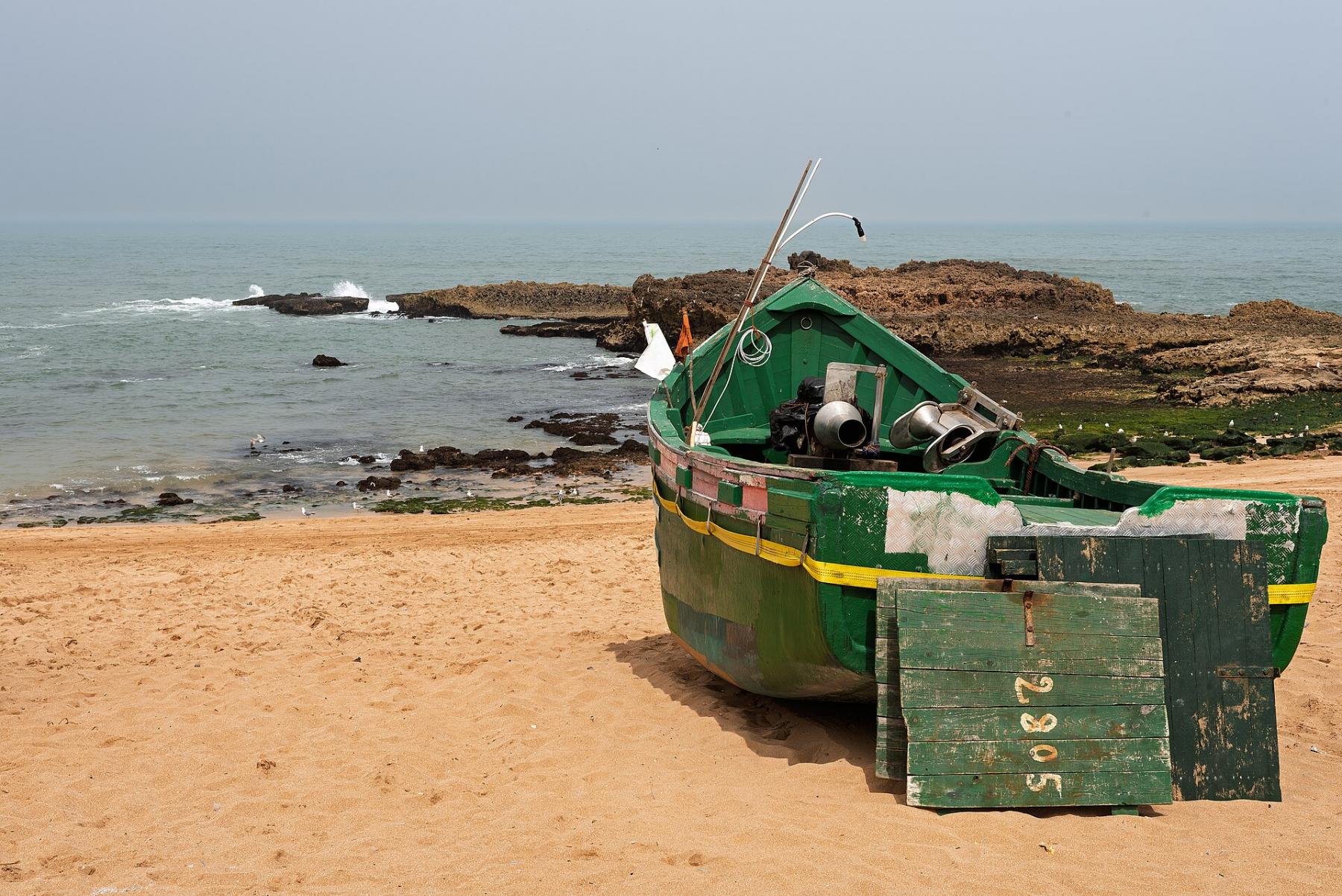
A fishing boat in the port of Essaouira. Photo by Mustang Joe via Wikimedia Commons.
She recalled her experience at 10 years old, when she attended for the first time a lecture given by her mother, convinced that she wouldn't understand a word.
“Instead, I was pleasantly surprised by her gift for making complex ideas simple, and I left having understood exactly what she did,” Abla remembered.
“She showed us we could do whatever we wanted and that we should be ambitious about our own careers. It also helped enormously to have a mother recognized for her work. Every time we've crossed paths with her former students, they've expressed real admiration for her.”
Retirement, yoga and freedom
“Honestly, I never felt any obstacle in my career progression,” Raïssi admits. “Several pioneering women in applied mathematics in Morocco, including myself, have always strived to leverage our research for national development.”
She communicates the same passion, advice and dedication to build the same environment to her mentorees and students, pushing them to apply their full potential. She is a founding member and general secretary (2005-2010) of the Moroccan Society of Applied mathematics.
She is also a member of the African Women In Mathematics Associations (AWMA) whose main mission is to “encourage female students to participate in various research projects”.
Outside science, Raissi enjoys yoga, swimming in the sea, going out and travelling with her family and friends. “So retirement has given me more freedom to choose how I want to remain intellectually active while also enjoying other aspects of life.”
Josiane Kouagheu
Banner image: Fishing boats in the port of Essaouira. Photo by DimiTalen via Wikimedia Commons.