East region of Cameroon: the dependence on forest resources
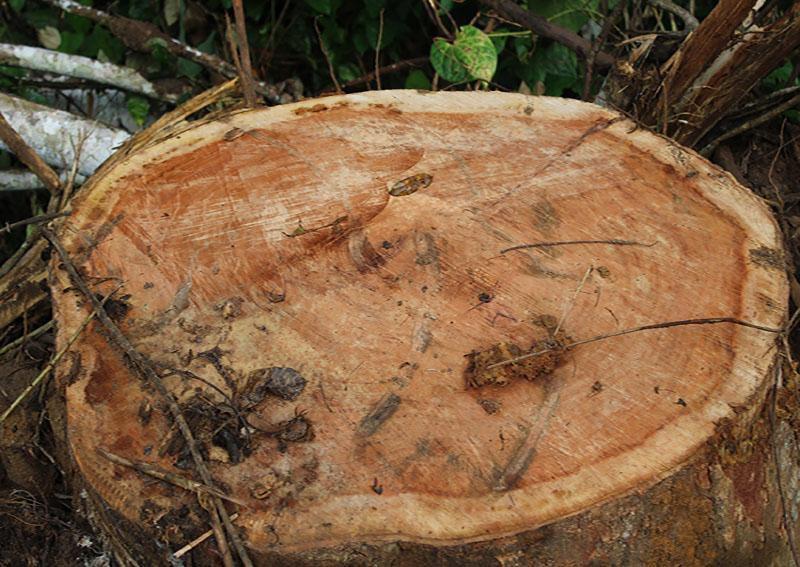

According to a study, 78 % of surveyed households were dependent on forest resources. This intensive exploitation affects 41.75% of resources, resulting in species depletion.
In the Congo Basin, the forest is everything to the population. “It is from the forest that the Baka draw the resources they use to build their homes, treat their illnesses—for the most part—and feed themselves,” stated the World Wildlife Fund (WWF) in a report in 2007, noting that from an economic standpoint, the forest is the “nurturing source of the Baka.”
“The forest continues to be their granary, place of worship, village, school, and place for the transmission of knowledge and traditions—in short, a multidimensional resource space.”
Almost 20 years later, the situation hasn’t changed for the Baka (indigenous people of the forest) and other people living around the Congo Basin.
Medicinal plants
According to a paper published in World Development Sustainability, 78.38% still depend on forest resources. The study was conducted in 10 villages adjacent to the Angossas Communal Forest (ACF) in the eastern region of Cameroon where communities rely on forests for essential livelihoods such as Non-Timber Forest Product (NTFP) collection, small-scale agriculture, and hunting, as well as for cultural and spiritual practices.
To analyse the drivers and consequences of forest dependency, the researchers interviewed 223 individuals in all 10 target villages riparian to the ACF between August and September 2024.
They found that forest resources account for 73.38 % of global dependency and household income. Concretely, the most commonly used resource is medicinal plants (32.23 %). Firewood follows at 29.21 %, food (24.30 %), wood timber (14.22%)…
On the other hand, agriculture (33.76 %) was the leading forest-based activity, followed by the trade of NTPFs, fishing, hunting, and the timber trade being the least prevalent.
Moreover, the team discovered that dependency in forest-based activities or resources differed across the sample villages. Mba registered, for example, the maximum dependency on firewood (46.9 %), food (30.5 %), and medicinal plants (43.3 %).
Firewood
Anguegue, another village, “then presents a particular pattern, given the great use of medicinal plants (9.0 %) and the absence of firewood use,” the team wrote.
But the harvesting practices of the resources revealed a more serious problem. 64.04 % of people cut down tree species to extract forest resources, the paper highlighted. Plus, the analysis showed that slash-and-burn agriculture was the most prevalent, practiced by 82.09 % of heads of households. And only 2.49 % of farmers claimed to keep trees on their plots.
“Our results reveal three modes of resource extraction in the area, emphasising that logging was the most commonly used harvesting mode by local communities,” the researchers wrote. “This may be because logging provides a wide range of resources in large quantities, such as firewood, construction wood and commercial timber.”
Even if it constitutes an “essential source” of household income, it also contributes significantly to the loss of forest ecosystems, the team continued. In fact, 42.82 % of respondents reported a less available resource.
For the researchers, to reduce this pressure on forest products while meeting community needs, “it is urgent” to promote sustainable agricultural practices such as crop rotation, the no-burn farming method combined with the use of natural fertilizers. They also recommended the diversification of income sources through the promotion of sustainable activities and the development of a high-value non-timber forest product.
Josiane Kouagheu