In Cameroon, poor post-harvest practices are constraints to farmers’ productivity in vegetable production
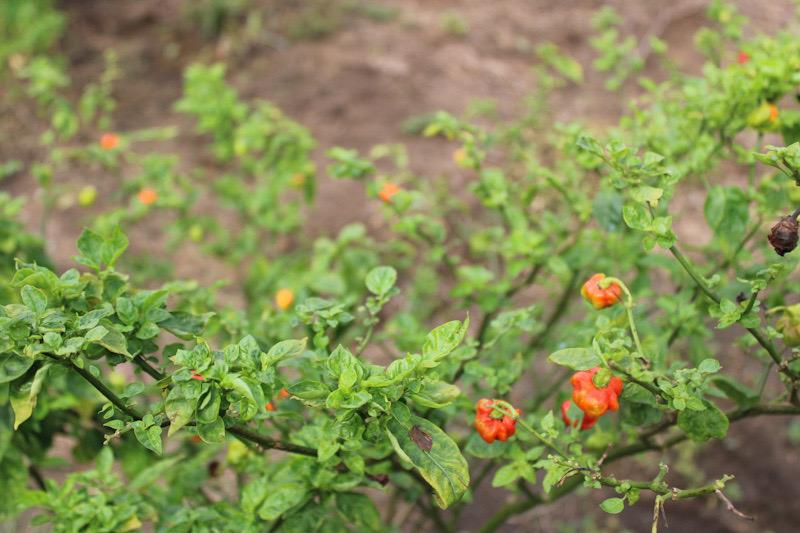

A new study also found that poor marketing facilities and lack of credit affect the productivity of tomato, pepper, cucumber, and okra farmers.
In Cameroon, vegetable production represents around 22.9% of the total agricultural production (IRAD, 2010). All over the country, farmers produce vegetables such as tomatoes, onions, pepper, or cucumbers.
But according to the Food and Agriculture Organization (FAO), up to 40 percent of certain crops are lost in Cameroon, particularly fruits, vegetables, and tubers.
These losses occur at all stages of the value chain—from production to marketing—resulting in significant economic losses for small producers and limiting households’ access to quality food products.
Through the country, these losses are amplified by factors such as poor handling practices, inadequate transport infrastructure, improper storage, lack of preservation equipment, climate pressures, and limited local processing of perishable products.
“These constraints reduce food availability, affect agricultural incomes, and undermine the livelihoods of rural populations,” the FAO wrote in a report published in March 2026.
A new study published in Agricultural Sciences also found that poor post-harvest practices, poor marketing facilities and lack of credit facilities affected the productivity of tomato, pepper, cucumber, and okra farmers in Cameroon.
Poor marketing facilities
The research was conducted in two divisions (Mungo and Nkam) of the Littoral region of Cameroon. The team of scientists from the University of Buea and the Foundation for Entrepreneurship, Research and Development (FERD) interviewed about 258 farmers (143 were females).
They found that poor post-harvest practices constitute a constraint to productivity by 5.3%. Similarly, as the trend in poor marketing facilities increases, it increases farmers’ strong agreement as a constraint to productivity by 3.4%.
Moreover, poor marketing facilities, also significantly affects productivity at the 10% level of significance. For the team, this situation can be explained by the lack of alternative marketing facilities, a problem faced by many farmers in Cameroon.
The scientists also discovered that farmers perceive lack of credit facilities as a significant constraint to productivity in vegetable farming.
In a study published in 2025 in Sustainability, another team of researchers found that limited access to credit restricts productivity for nearly 65% of smallholder farmers in some parts of Cameroon (Northwest for example).
Josiane Kouagheu