Can cocoa farming reduce poverty in Cameroon ?

According to a new study, higher cocoa income significantly reduces poverty and increases the likelihood of food security.
Cameroon is the world’s fifth largest cocoa producer. During the 2024-2025 season for example, the country even saw a record cocoa production, reaching 309,518 tons nationwide. Despite this record-breaking growth, many cocoa farmers still struggle, thanks to price fluctuations and sometimes poor management.
But according to a new study published in Strategic Business Research, cocoa farming can reduce poverty in Cameroon. “Cocoa farming in Cameroon represents a strategic pathway out of poverty, improving both household welfare and food security,” the team of Cameroonian researchers found.
In their article, they noted that “higher cocoa income significantly reduces poverty and increases the likelihood of food security.” The scientists used data from the Fourth Cameroon Household Survey (ECAM4), a comprehensive, nationwide survey conducted by the National Institute of Statistics (NIS) in 2014.
183,758 households
They selected the data due to its national representativeness, large sample size (183,758 households), which provides extensive information on household socio-economic characteristics, agricultural practices, income sources, and consumption patterns variables that are critical for analyzing the impact of cocoa farming on household livelihoods in Cameroon.
With that data, the team constructed the food security index by adopting the consolidated approach for reporting indicators of food security (CARI) methodology, developed by the World Food Program (WFP) for assessing food insecurity.
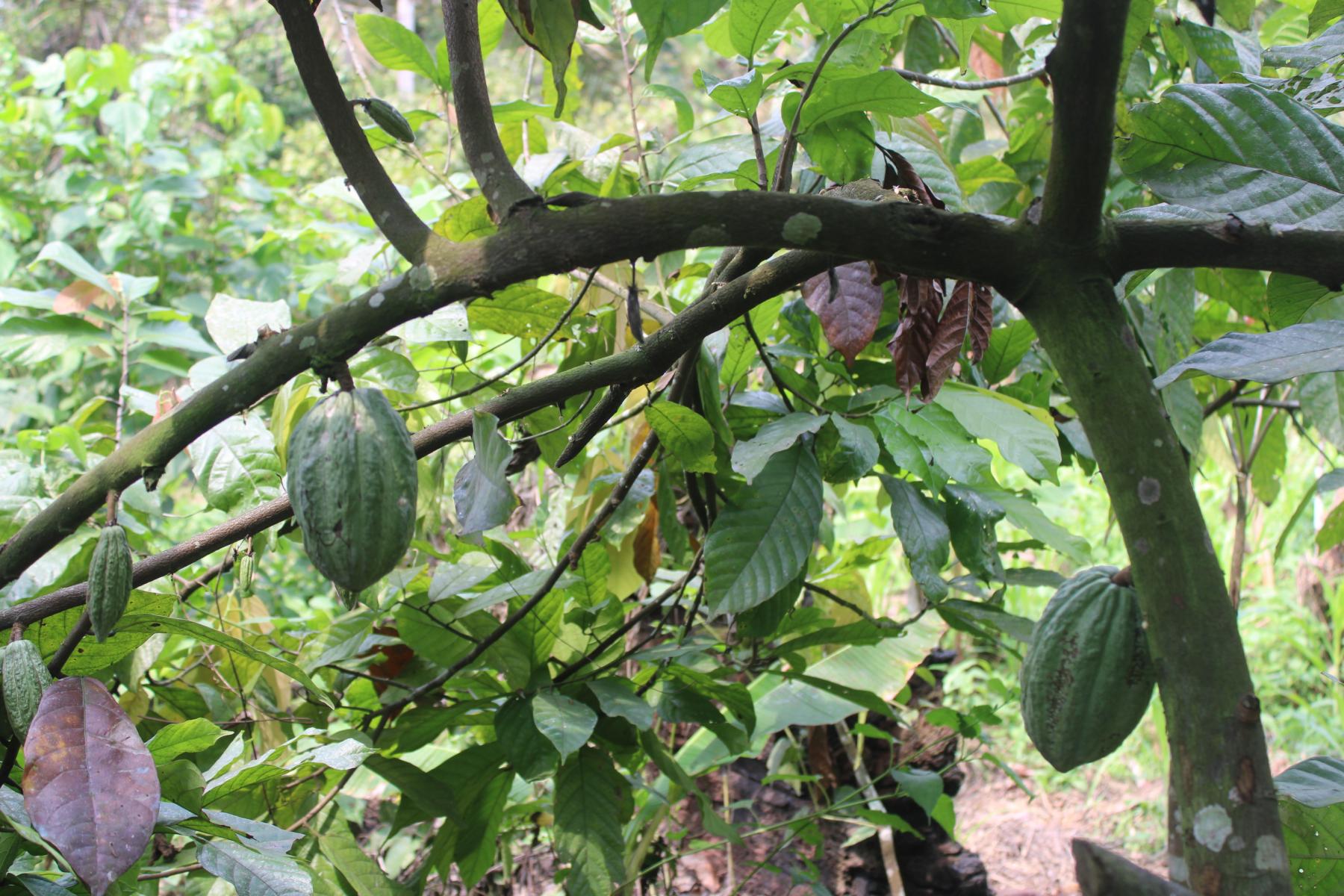
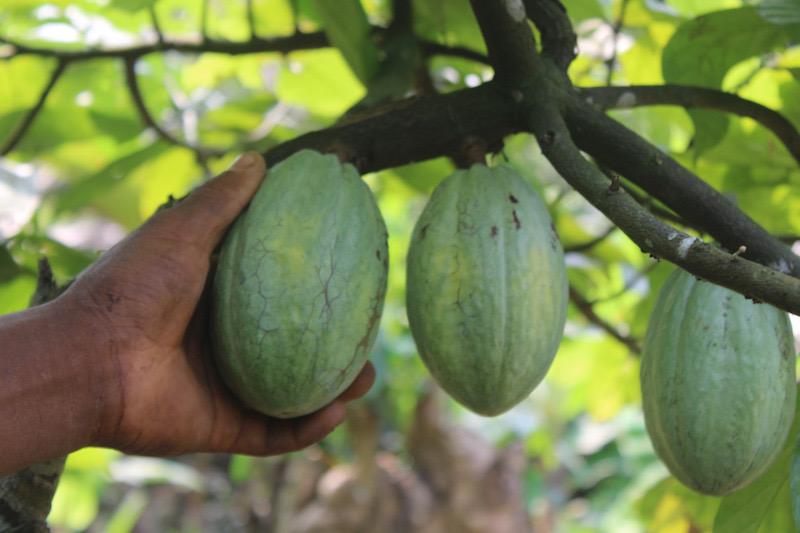
A cocoa farm in Cameroon. Photo: Josiane Kouagheu/ Agripreneurs d’Afrique
This approach enables the determination of the proportion of food-insecure individuals within a given population and provides a standardized framework for comparing food security levels across households.
The researchers used the Multidimensional Poverty Index (MPI) which captures deprivations in health, education, and living standards, offering a more comprehensive understanding of household poverty, to directly evaluate whether essential needs across multiple domains are being satisfied.
Increase by 64%
Their findings are various and depend on many factors. For example, older household heads increase the probability of household food security by 64 %.
“This can be explained by the fact that cocoa farming is an experience-intensive activity; households led by older heads benefit from accumulated knowledge and practical skills, leading to higher productivity,” the study highlighted.
“Increased productivity, in turn, raises household income, improving purchasing power and food security. This observation resonates with the capability approach, which highlights the importance of skills, experience, and agency in enhancing individual and household well-being.”
Educational attainment of the household head is another significant determinant. The scientists found that households where the head has completed secondary education have a 40 % higher probability of being food secure, while those with higher education show a 20 % increase.
“Education enhances skills, knowledge, and productive capacity, thereby increasing returns from cocoa farming and household purchasing power,” they wrote.
95% are food secure
“95 % of cocoa farming households are food secure, whereas only 5 % are classified as food insecure,” the research revealed.
“This indicates that participation in cocoa farming contributes significantly to monetary well-being and the ability to access food. However, it also highlights that income alone may not fully address other dimensions of deprivation such as education, health, and living standards captured by the multidimensional poverty index (MPI).”

This observation aligns with the sustainable livelihoods and capability approaches, which emphasize that income is just one component of well-being and that multiple dimensions must be considered to assess true household welfare.
In conclusion, the team wrote that by investing in targeted interventions that enhance productivity, human capital, market integration, and environmental sustainability, policymakers can amplify these benefits and support more resilient and sustainable rural development.
Josiane Kouagheu