In Cameroon, neem seed oil and powder protect maize crops from the weevils
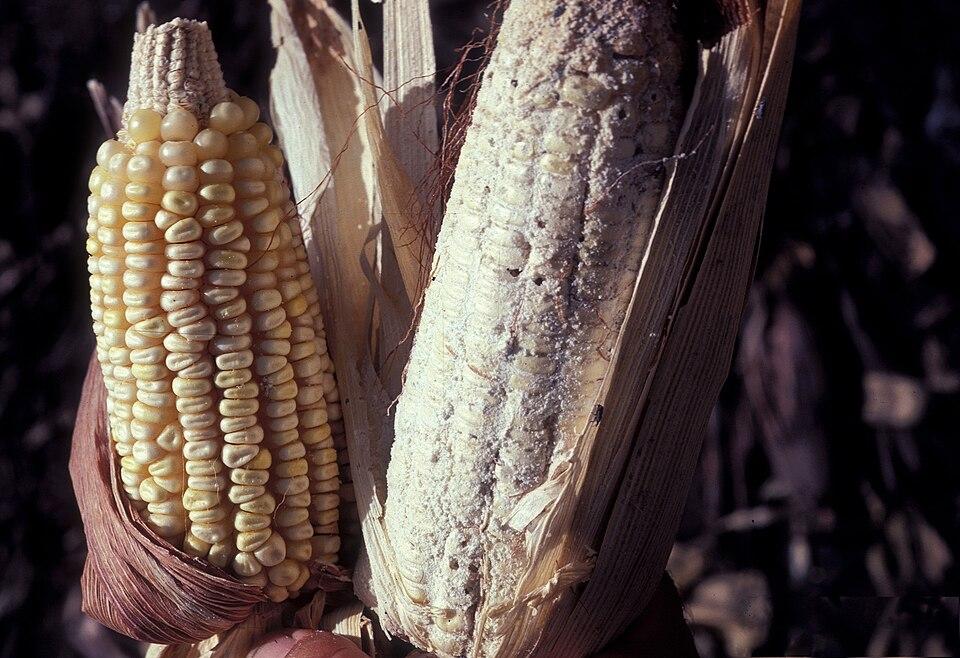

According to a study, the toxic effects that plant can control corn weevils, while helping to control environmental pollution, and reducing consumer’s diseases due to the use of synthetic insecticides.
On August 26, 2024, six people died after eating maize crops allegedly contaminated with toxic substances in Ngola Mbele, a village located in the East region of Cameroon. According to The Guardian Post, the victims, including children aged eight to 12, “came together to share a meal prepared from corn that had been treated with pesticides.”
The news shocked the public at that time. But the case was far from being isolated. In a “Synthesis Report on the Environmental and Health Impacts of Pesticides and Fertilizers and Ways to Minimize Them” published in 2022, the United Nations Environment Programme noted that about 385 million cases of unintentional acute pesticide poisonings have been estimated to occur every year, with approximately 11,000 deaths.
In Cameroon, the invasion of maize pests such as maize weevils (Sitophilus Zea mays) in crops and storage areas causes losses estimated at around 20-25 % of field production, and 15-20 % of post-harvest losses.
Natural insecticides
To fight those insects, farmers and owners of storage warehouses generally use synthetic insecticides that have an effect on the environment or the health of consumers. Some use traditional methods including exposure to the sun, smoking, insecticide plants such as pepper.
But the “fight against pests of crops and harvests is mainly done through synthetic insecticides, approved or not,” a paper published in the Journal of Environmental Education Research and Sustainable Development, stated.
“The urgency of the development of natural insecticides or plant-based bioinsecticides is signaled and proves to be a strategic element in the quest for large production, food security and environmental protection.”
To do so, the team of Cameroonian researchers evaluated the repellent capacity and efficacy of neem (Azadirachta indica) seed oil and powder extracts on maize weevils in storage.
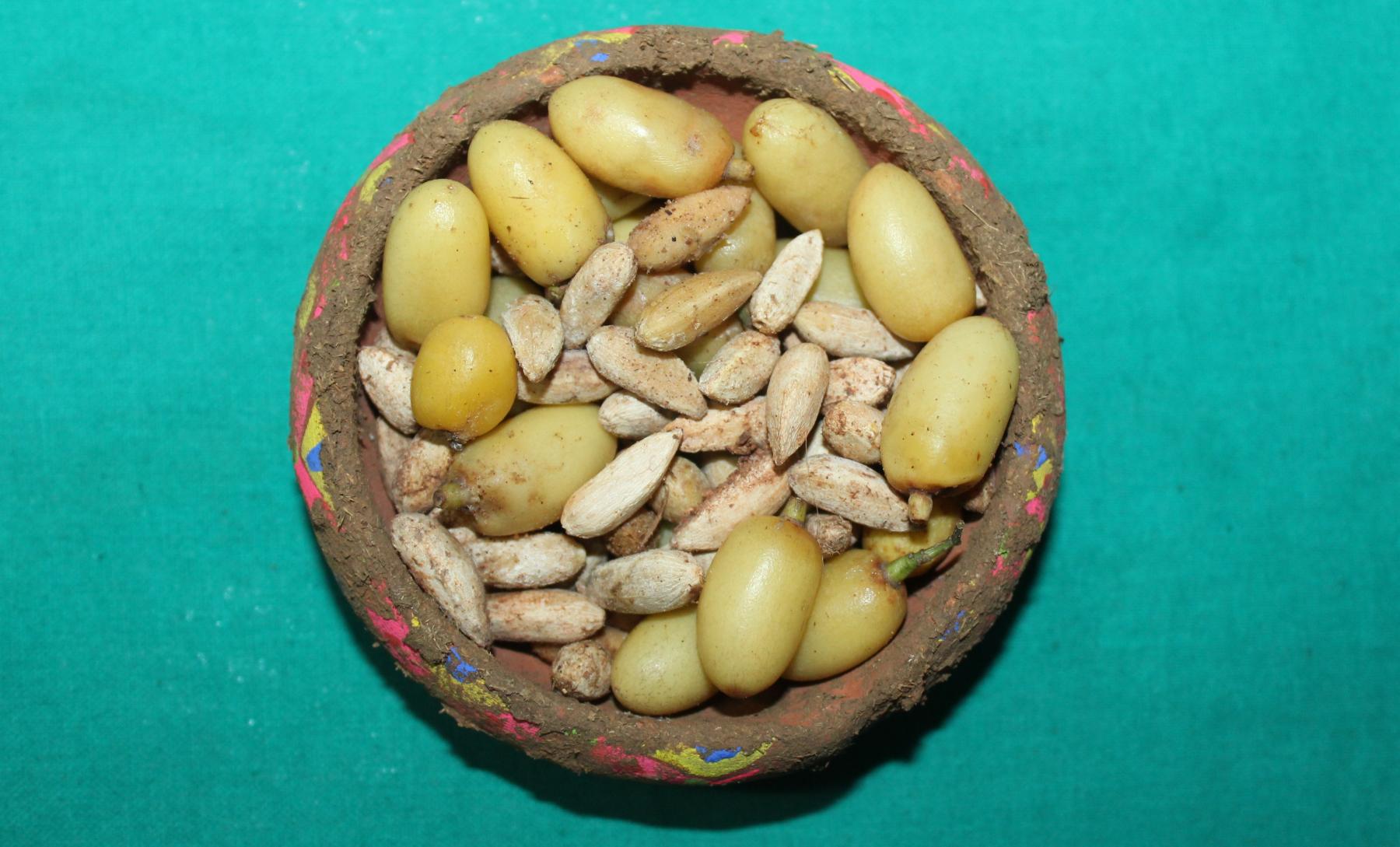
Neem fruits and seeds. Photo: Paryavarana Margadarsi Vaisakhi via Wikimedia Commons.
They purchased white maize seeds and the shelled kernels and seeds of the plant in two different markets in Yaounde, the capital of Cameroon. They collected the samples of maize weevils from a maize seller's store.
Powder and oil
They dried the seed almonds and molded them. They used a part of the powder to obtain oil. The scientists used the repulsion test or extract avoidance test to determine whether weevils, given the choice, were able to detect the extract from neem seeds and sidestep it.
The team discovered that maize treated with different doses of Azadirachta indica, on the maize weevils shows that the mortality rate increases with the duration of contact and reaches its maximum on the 4th day for the 100 µl dose.
“However, since the oil extract is almost totally deadly from the first day, it can be assumed that insects that died of natural death would not have lasted more than two or three days in contact with the oil anyway,” they wrote. “In that case the oil is 100 % lethal on the 4th day, for the smallest dose.”
The researchers also noted that “no matter the concentration", the neem oil is repellent toward S. zeamais after 2 hours, and moderately repulsive during the first two hours. The same thing tends to happen with the neem power during the first 48 hours.
In fact, the toxicity tests revealed insecticidal properties of the oil, ranging up to 90.72 % on the 4th day regardless of the dose, the study found.
Scientific data
More specifically, from the first day the doses of 200 µl, 300 µl record for example a minimum mortality rate of 92 %, while at 400 µl the oil is 100% lethal on the 1st day.
The powder extract had a mortality of 93.33 % at doses of 1g and 5g, from the 2nd day. From the 3rd day, the doses of 5 g, 10 g, and 15 g reach 100 %.
“These scientific data bring more precision to Cameroonian or African users, who were using it informally until now,” the team concluded.
In a study published in the International Journal of Agricultural Research, another team of scientists found that the application of both neem seed and leaf powder “are effective in the control of maize weevil and could be used as an alternative control option in integrated stored pest management strategies by small scale farmers.”
Josiane Kouagheu
Banner image: Frank Peairs, via Wikimedia Commons.