Cesilia Mambile uses artificial intelligence to combat forest-fire in Tanzania


“African women researchers”. Episode 2. Cesilia Mambile saw a computer for the first time of her life in their neigbours’ house in 2001. She was thirteen years old. Every time, she will quietly sit and watch them operate it. Even if she couldn’t understand what they were doing, that particular machine was the beginning point of her passion for science.
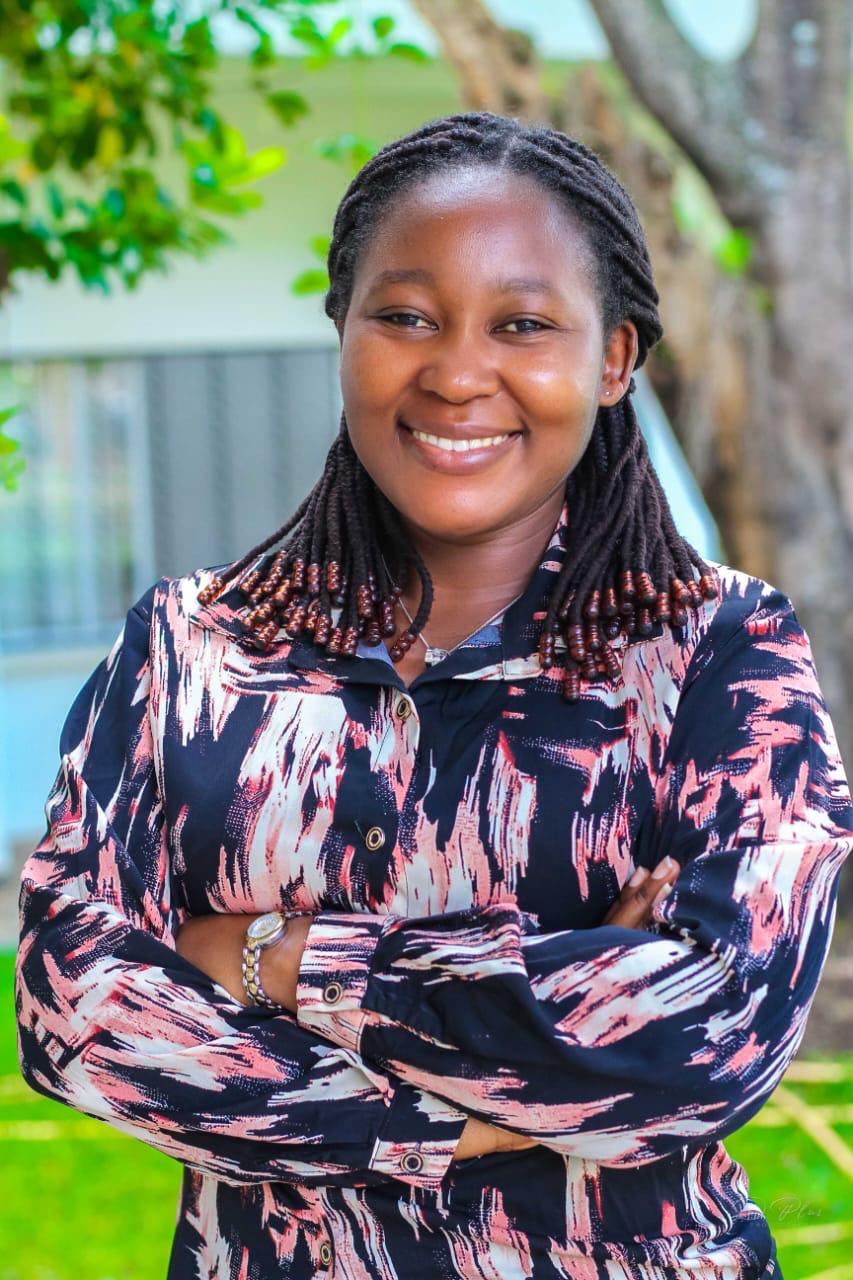
Two decades later, Cesilia Mambile is now a researcher and lecturer from the university of Dodoma, Tanzania. She is currently pursuing her PhD in Information and communication science and engineering at the Nelson Mandela African institution of science and technology (NM-AIST), specialising in the use of artificial intelligence for environmental protection, particularly forest fire prediction.
She is also the founder and CEO of SmartEarth Solutions which focuses on developing AI-powered tools to address climate-related challenges in Africa. Cesilia Mambile believes that artificial intelligence can solve African problems.
Introduction of our series “African women researchers”
Episode 1. Professor Francine Ntoumi and the passion of science
In her recent study “Deep learning models for enchanced forest-fire prediction at Mount Kilimanjaro, Tanzania: Integrating satellite images, weather data and human activities data” published in Nature for example, the researcher and her co-authors present an innovative approach for forest-fire by integrating human activities with satellite data and environmental variables in Deep Learning models.
Concretely, they show how the Convolutional long short-term memory (ConvLSTM) model captures both spatial and temporal patterns, and predicts high-risk periods based on weather data and human activity in the Africa’s highest peak and UNESCO World heritage site.
The challenge of predicting Forest-fire presents unique complexities in ecologically diverse regions such as Mount Kilimanjaro, where the dynamic interplay between human activities and environmental variables creates a multifaceted prediction landscape.
Since traditional approaches have demonstrated significant limitations because both natural and anthropogenic factors contribute substantially to fire risks in the regions, Cesilia Mambile and her co-authors have developed hybrid models such as ConvLSTM.
These models integrate environmental data, such as satellite-derived vegetation indices and human activity data, including tourism and beekeeping, to identify regions of Mount Kilimanjaro that are more susceptible to fires and to predict periods when fire risks are elevated.
“The model I developed has shown strong performance and has been validated by local experts,” Cesilia Mambile said. “The goal is to support early warning systems and help decision-makers act before fires escalate.”
For Agripreneurs d’Afrique, this passionate researcher, current president of STEMI-Africa at NM-AIST who works on both academic and community-based science initiatives, shares her story and her love for artificial intelligence.
Agripreneurs d’Afrique: where does your passion for research come from?
Cesilia Mambile: my passion for research stems from a deep desire to address real-world problems that affect my country and the continent. Growing up in a rural area of Tanzania, I witnessed firsthand how communities were affected by environmental issues, including drought, deforestation, and, more recently, forest fires. I wanted to be part of the solution, not just someone who talks about problems. Research provides me with a way to contribute meaningfully, particularly by applying science and technology to enhance livelihoods.
Your first meeting with a computer…
I remember the first time I saw a computer; I was thirteen years old, and it was in 2001. Our neighbour had just purchased one, and although I had no idea what it was or how it worked, I was immediately intrigued. I would often sit quietly and watch them operate it, hearing unfamiliar terms like “turn it on,” “shut it down,” “operating system,” and “memory.” My family could not afford one, but my curiosity continued to grow. I kept wondering: what is this machine for, and what can it do? That early interest persisted and eventually led me to pursue a Bachelor of Science degree in Information Technology at the Institute of Finance Management in Dar es Salaam.
I later advanced to a Master’s degree in Information and Communication Science and Engineering at NM-AIST, where I began to focus more on how technology can be used to address real-world challenges. Currently, I am pursuing my PhD at NM-AIST, where my research centres on developing deep learning models that integrate satellite imagery, weather data, and human activity patterns to predict forest fire occurrences in Mount Kilimanjaro National Park. The model I developed has shown strong performance and has been validated by local experts. The goal is to support early warning systems and help decision-makers act before fires escalate.
Did your family understand this passion?
It was a mixed experience. My mother has always been supportive, though she did not fully understand what I was doing at first. I remember once she asked, “So when you finish this PhD, will the forest stop catching fire?” It made me laugh, but it also reminded me of how disconnected our communities are from the science we do. Some relatives, on the other hand, felt I was over-educated for a woman and should consider settling down instead. That pressure never really goes away. But I have learned to stay focused and surround myself with people who understand and respect my path.
You mostly spent your career without consistent mentorship…
One of the biggest challenges has been navigating my career without access to consistent mentorship. In many cases, I have had to figure things out on my own, whether it is applying for fellowships, developing proposals, or finding the right collaborators. Structured mentorship is limited, particularly for women in technical fields such as AI and climate science in Tanzania.
Subscribe to our WhatsApp channel
This lack of guidance often extends into the technical side of my work as well. In developing a deep learning model to predict forest fires, I have faced recurring challenges in handling large and complex datasets. While much of the data for environmental or fire-related research is available, it requires substantial computing power to process and analyse effectively. This becomes a barrier and slows progress, especially in resource-limited environments.
Then, you built your own system…
I built my support system. I connected with other women in science across Africa through platforms like OWSD. I also started mentoring girls through STEMi-Africa, which has become a powerful source of motivation for me. On the professional side, I made use of open data platforms and joined international networks to stay informed and supported. In 2024, I spent time at the University of Udine in Italy and later at UM6P in Morocco, where I participated in the African Women in Tech and AI Program.
In 2025, I was selected by the Falling Walls Foundation for the Female Science Talents Intensive Track, which gave me a unique opportunity to reflect, sharpen my skills, and learn how to persist with focus. Being part of these communities reminded me that progress is not always linear and that staying grounded and consistent makes all the difference.
Women in artificial intelligence…
One of the biggest challenges I face in my scientific career is navigating systems that are not designed to support independent researchers, especially women. These challenges include limited funding opportunities, rigid institutional hierarchies, and a lack of transparency in decision-making. Sometimes, your contribution is recognised only if you are already in a position of influence, regardless of the work you have done.
This becomes even more challenging when combined with the added pressure of being a woman in technical fields such as AI and environmental science. You are constantly expected to prove yourself in spaces where leadership is still largely associated with men, and where your expertise is often questioned before it is acknowledged.
What makes it harder is the lack of genuine support from peers and management. Instead of being mentored or encouraged, you are often overlooked simply because you are doing something different or pushing for innovation. Even when your results are strong, gaining the visibility or institutional recognition you deserve is difficult without the right backing. This affects many women, not just me. It slows us down, not because we lack ability, but because we are constantly navigating barriers our male counterparts do not face.
As a woman, what is the most difficult thing for you personally and professionally?
Balancing societal expectations with academic goals has been one of the most challenging aspects. There is still a strong belief that women should prioritise family over their careers, and that shows up in subtle ways, especially when you are trying to build something innovative.
In terms of support from my superiors, I would say it has been limited. While I have had moments of encouragement, in most cases, I have had to rely on myself. Genuine mentorship or structured support has been rare. Often, you are left to push forward on your own, find your opportunities, and even explain the importance of your work repeatedly to be taken seriously.
How did you overcome them ?
For me, the most important thing is to stay grounded in my vision. I know why I started this journey, and I will not let doubt or bias distract me from it. I have learned to keep going even when things are slow and to measure progress in small wins. I plan to continue learning from women who have walked this path before me, those who have broken barriers and created space for others. Listening to their stories and experiences gives me the strength to continue pushing forward.
I also believe in the power of networks. I will continue building meaningful connections, both locally and globally, through platforms that support women in science.
Women in science are not waiting…
Just a reminder that women in science are not waiting to be rescued; we are already doing the work. What we need is for our contributions to be acknowledged, funded, and integrated into policy. I also believe African problems require African solutions, and it is time to trust and invest in local researchers.
Subscribe to our Newsletter
Josiane Kouagheu