In Cameroon, the use of AI in rural areas

According to several studies and innovations, Artificial Intelligence is improving heath treatment, agriculture and the protection of the environment across the country.
In July 2025, Cameroon launched its first ever National AI Strategy (SNIA). After years of promises, the country finally acknowledged the importance of Artificial Intelligence. According to the authorities, the aim is to become a continental AI hub by training AI professionals, creating jobs, and developing local AI solutions for sectors like health and agriculture.
But on the ground, many initiatives have already been implemented. According to several studies and innovations, Artificial Intelligence is improving heath treatment, agriculture and the protection of the environment in many rural areas across the country. Agripreneurs d’Afrique selected six projects.
1- Ndemri, an Ai-driven SMS Platform for equitable agriculture extension in northern Cameroon
In Cameroon, Agriculture employs approximately 60% of the total population. Small-scale farmers face many challenges such as declining yields due to soil degradation, access to information, plant diseases and climate change.
For the past two years, a young researcher and PhD student in Artificial Intelligence has been fighting to help these millions of farmers. In northern Cameroon where Isaac Touza works, the overwhelming majority of the population practices agriculture and livestock farming.
He launched "Ndemri" (which means agriculture in Fulfude, one of the region's main languages), to help them. The application, an artificial intelligence (AI)-powered agricultural advisory system, provides evidence-based farming guidance to rural communities across the region and above through short message service (SMS).
Designed for compatibility with basic GSM-enabled mobile phones and independent of internet access for end-users, the system integrates large language models (LLMs) via the ChatGPT API to generate contextually relevant, linguistically localized responses to a wide array of agricultural queries.
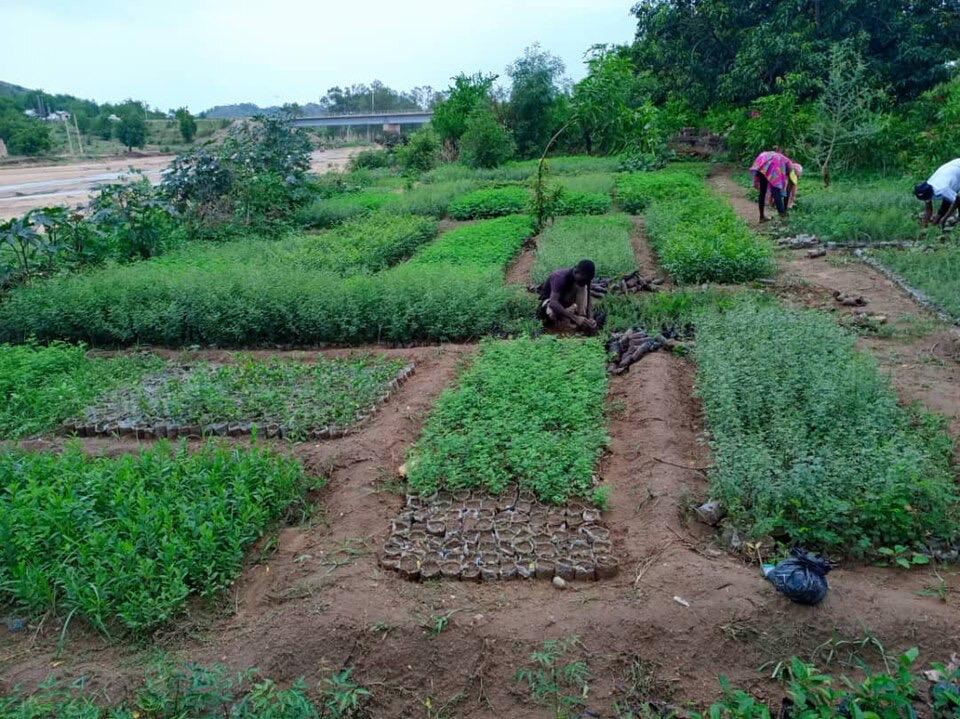
According to the researcher and his colleagues, a quasi-experimental evaluation was conducted in the northern regions of Cameroon over a four-month period, employing a matched control group methodology involving 831 treatment farmers and 400 controls. “Statistically significant improvements were observed among participants using NDEMRI, with mean crop yields increasing by 16.6% and agricultural incomes rising by 23%, relative to the control group,” they wrote in a study published in Journal of Intelligent Management Decision.
“Adoption of improved agronomic practices was notably higher among users of the system. A total of 2,487 unique messages were exchanged, covering themes such as pest management, planting schedules, soil health, and post-harvest storage, with 78% of users reporting that system responses were context-sensitive and adapted to local climatic and cultural conditions.”
Isaac Touza uses TensorFlow-based machine learning and computer vision models to analyze crop images. The app combines real-time weather data and soil analysis to optimize the advice given to farmers. These technologies enable early detection of disease and better management of agricultural resources. In addition, the analysis kit made up of sensors provides physico-chemical soil parameters, which are processed by their algorithm to provide recommendations tailored to local crops.
2- How AI can help to improve solar irradiation and temperature prediction in northern Cameroon
“This research is significant as it not only demonstrates the effectiveness of LSTM neural networks in predicting solar irradiation and temperature simultaneously but also highlights the potential of Solar energy for domestic and transportation applications in Cameroon, contributing to the global fight against climate change.”
The study published in the Journal of Engineering used long short-term memory (LSTM) neural networks to predict the parameters influencing photovoltaic production, namely, solar irradiation and temperature over 24 h in many areas of northern Cameroon (Kousséri, Yagoua, Garoua, Maroua).
LTSM are a form of recurrent neural networks, with the only difference being that they have short-term memory and long-term memory, allowing them to access information over a more extended period. They are suited to solve problems that consider past states or predictions to determine the current and future behaviour of the system. Similarly, in the long term, they enable the consideration of major variations in data over several years to improve their performance.
The memory cell of an LSTM neural network is composed of several gates: an input gate, an output gate and a forget gate. These gates regulate the flow of information within the memory cell, allowing control over which information to retain and which to forget. This gives LSTM networks the ability to memorise important information over long sequences and ignore less relevant elements.
The researchers obtained their database from meteorological data from NASA’s Modern-Era Retrospective Analysis for Research and Applications, version 2 (MERRA-2): date and time, temperature, relative humidity, atmospheric pressure, wind speed, wind direction, solar irradiation, precipitation.
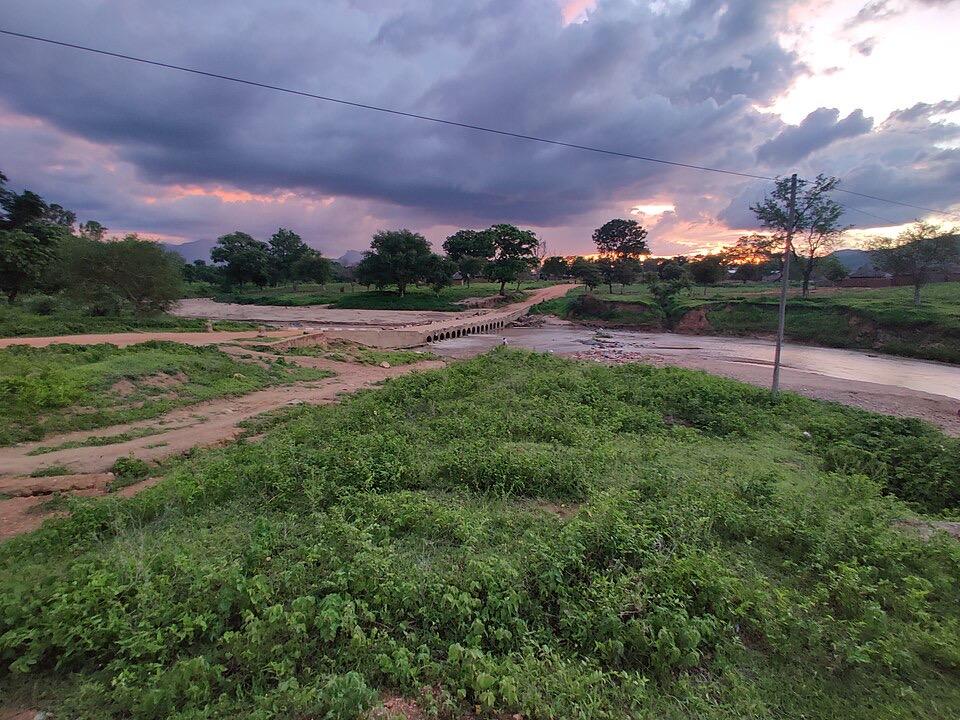
Image by Kenmeugne Kamtoh Kévin
via Wikimedia Commons
The exploitation of their data has revealed the temporal and spatial variation of the energy potential in the northern Cameroon. The locations presenting the extremes obtained 5.34 kWh/m2/day and 5.97 kWh/m2/day, respectively, for the minimum and maximum potential.
“We can conclude that the minimum energy potential in the locality of Banyo of 1.949 MWh/m2/year can be used to power a solar-powered EV and consequently those in all localities in the study area,” the authors wrote.
“By comparing the minimum Solar energy (SE) potential obtained with the minimum potential that has enabled the powering of solar EVs in the literature review, it is concluded that the northern part of Cameroon is favourable for their development,” they concluded.
3- Fertilization of maize based on recommendations from Artificial Intelligence on a ferrallitic soil in Central Cameroon
“By deciding to replace standard IRAD fertilization with AI fertilization, farmers double their profitability.”
Published in February 2025 in the International Journal of Biological and Chemical Sciences, this study evaluated and tested the performance of Artificial Intelligence on maize fertilization. To accomplish this, three improved maize varieties (CHC 202 ATP, CM8704 and Kabamanoj F1) and three fertilization modalities (Control, IRAD and AI) were combined in a split-plot experimental design with three repetitions. The experimentation took place in the town of Nyom, located in central Cameroon.
The results showed that the interaction between Fertilization x Variety had no effect (P>0.05) on maize yield. The hybrid variety Kabamanoj F1 produced high yield (7.14±2.62 t.ha-1) compared to that of composite varieties. The AI fertilizer formulation produced a yield of 7.35±2.08 t.ha-1, specifically 4.45 t.ha-1 which was more than the control and 1.51 t.ha.

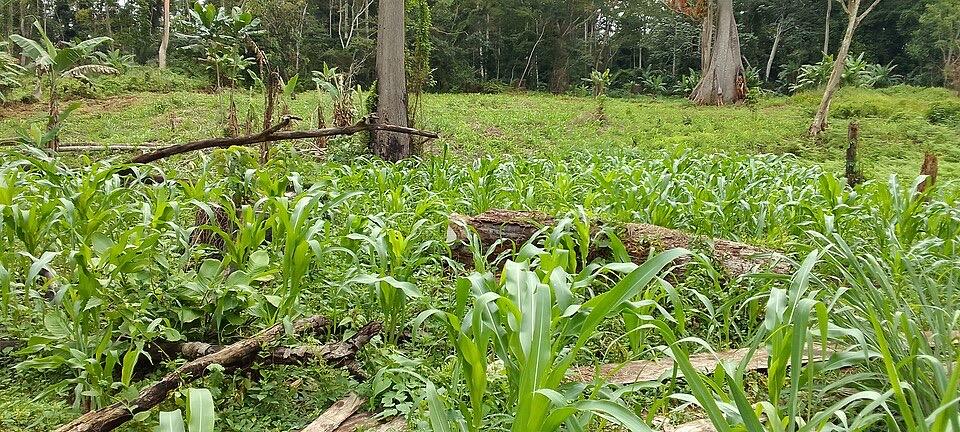
“The effectiveness of the mineral fertilizer formulation proposed by Artificial Intelligence can be explained by the combination of mineral fertilizers with chicken manure,” the researcher explained. “Indeed, the very high corn yields are obtained thanks to the combination of organic fertilizer with inorganic fertilizers, compared to the single application of inorganic fertilizers.”
“This result is similar to that of Sanogo et al. (2010), who showed that the use of high-yielding varieties and appropriate doses of mineral elements in irrigated lowland rice farming maximizes profitability,” he wrote.
4- AI to estimate peak flows and the return period of floods in Far-North Cameroon
“The results of our research work can be used for implementation of floods warning systems and for definition of an effective and efficient flood risk management policies in order to make the Far-North region of Cameroon more resilient to flood crises.”
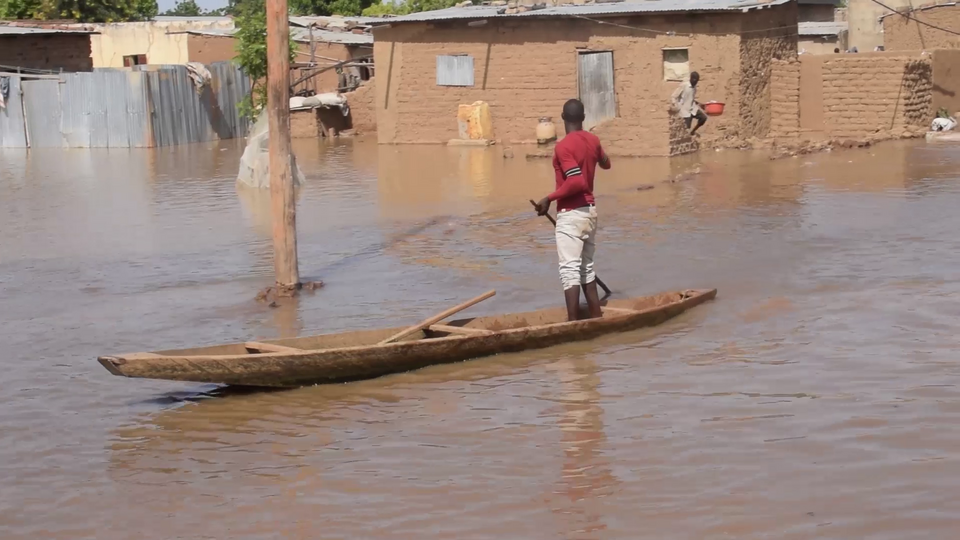
Thirty of the forty municipalities in the Cameroon’s Far-North region have been affected at least once by floods according to the analyses of the history of flood disasters. Loss of human lives, infrastructural and socio-economic damage, with the destruction of homes, crops and grazing areas, extensive direct and indirect health impacts and the halting of economic activities.
In December 2023, a team of researchers published a study in Scientific African where they highlighted the importance of the use of Artificial Intelligence to estimate peak flows and the return period of floods in Far-North Cameroon. “The most effective way to handle disasters is to prevent them from happening in the first place,” the researchers wrote.
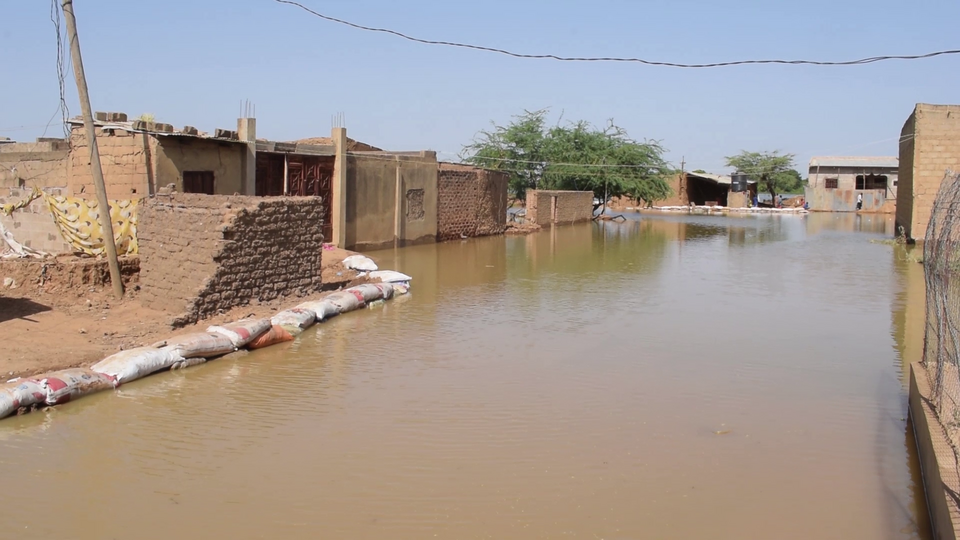
The dataset used in their research are historical temperature and rainfall time series, collected weekly or monthly from 1980 to 2020 by meteorological measurement stations in the Far-North region of Cameroon. They split their dataset as follows: 80% were used for models training and 20% were used for models testing.
To carry out their study, they used Google Colaboratory plateform with Tensorflow and Keras for designing, training, testing and evaluating different Machine Learning (ML) and Deep Learning (DL) models.
ML and DL based methods have been shown to be promising for flood modeling and offer a useful alternative to physical-based hydraulic models, which are computationally demanding and difficult to use in operational flood forecasting systems. In this light, ML and DL methods can be combined with traditional methods to improve their performance. The authors proposed an adjustment module based on learning methods, which uses forecast data from hydraulic models to give dynamic auto-adaptation capability to flood forecasting systems.
The 1D-CNN, LSTM and MLP models were designed, trained and tested on rainfall and temperature time series data for short term flood forecasting. The results of the tests show that the Stacked LSTM models for short and long term forecasting have very good flood forecasting performance.
In conclusion, the team explained that the main contribution of their work is the use of ML and DL methods for short term and long term flood forecasting in the far-north region of Cameroon and their findings are then alternatives to the poorly performing physical based models used in the region.
“Our research can be used for the implementation of automatic flood warning systems in the Far-North region of Cameroon,” the researchers wrote. “They can also be used to define effective and efficient flood risk management policies to avoid or limit loss of lives and material damage, and make the Cameroon’s Far-North region more resilient to flood crises. The use of ML and DL methods for real-time flood forecasting in the far north is an avenue to be explored for further work.”
5- AI to help detect and cure cervical cancer in the West region of Cameroon
“We are very grateful for the fact that science is making progress. When it does, it means that we can quickly find our cure!”
In their study published in Reproductive Health, in 2024, a team of researchers worked on the acceptability of artificial intelligence for Cervical Cancer (CC) screening in Dschang, a town located in the West region of Cameroon.
Cervical cancer represents the fourth most frequent cancer worldwide among women, with 604,000 new cases estimated in 2020. However, the global burden of this disease is unevenly distributed. About 90% of the estimated 342,000 deaths from CC in 2020 occurred in low-and middle-income countries (LMICs) like Cameroon.

Smartphone digital images acquisition after VIA (D-VIA) and VILI (D-VILI) procedures. This allow to slide between pictures on the Smartphone for diagnosis. It is a simple and reproducible procedure that facilitates the identification of lesion. Image by Pierre Vassilakos
More than 95% of CC cases are linked with a persistent human papillomavirus (HPV) infection. While CC is highly preventable, with HPV vaccinations, and screening of precancerous and cancerous lesions, in sub-Saharan Africa, lack of CC screening and HPV vaccination programmes, alongside a high prevalence of HPV and HIV infections, have contributed to the rising incidence of CC.
In 2018, the 3T approach (Test, Triage, Treat), which takes place as a single visit, has been implemented in Dschang, in collaboration with the Cameroon Ministry of Public Health, the Dschang Regional Annex Hospital, and the University Hospitals of Geneva (HUG). Primary HPV testing consists of HPV self-sampling, carried out by the women themselves (assisted by midwives if necessary) and analysed in about an hour followed by VIA-triage for HPV-positive women. Finally, if needed, treatment by thermal ablation or LEEP conisation can be performed.
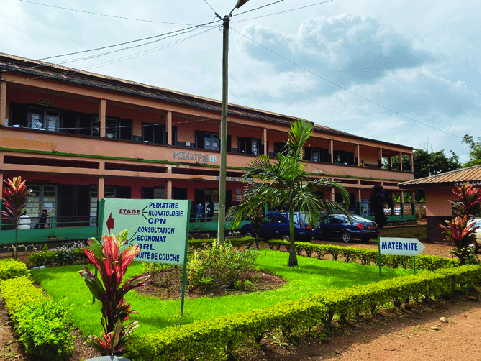
District Hospital of Dschang, Cameroon. Image by Pierre Vassilakos
While the use of artificial intelligence (AI) in the healthcare field is increasing in recent years, previous studies have evoked various barriers to the uptake of clinical decision support tools on smartphones by patients and healthcare providers. Concerns such as theft of devices, fear of a data breach and perceptions of reduced patient trust were highlighted.
For the researchers, the aim of their study was then to explore the acceptability and perspectives of females in Dschang, regarding a CAD screening tool for CC relying on AI prior to its implementation in the clinical setting. A secondary objective was to understand in which form and content women would like to receive information about the utilisation of AI for CC screening.
They interviewed 32 participants aged between 30 and 49 from both rural and urban areas. Females that had already participated in the Dschang Regional Annex Hospital cervical screening programme (3T) were contacted to share their perspective on the use of a screening tool for CC relying on AI.
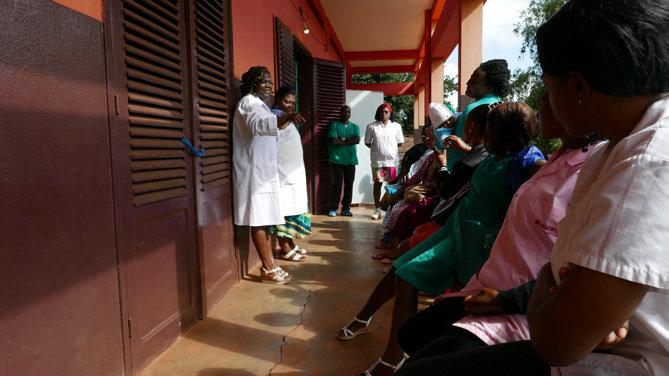
District Hospital of Dschang: women receive counselling service (communityeducation, counselling on sexual health and cervical cancer screening) before testing. Image by Pierre Vassilakos
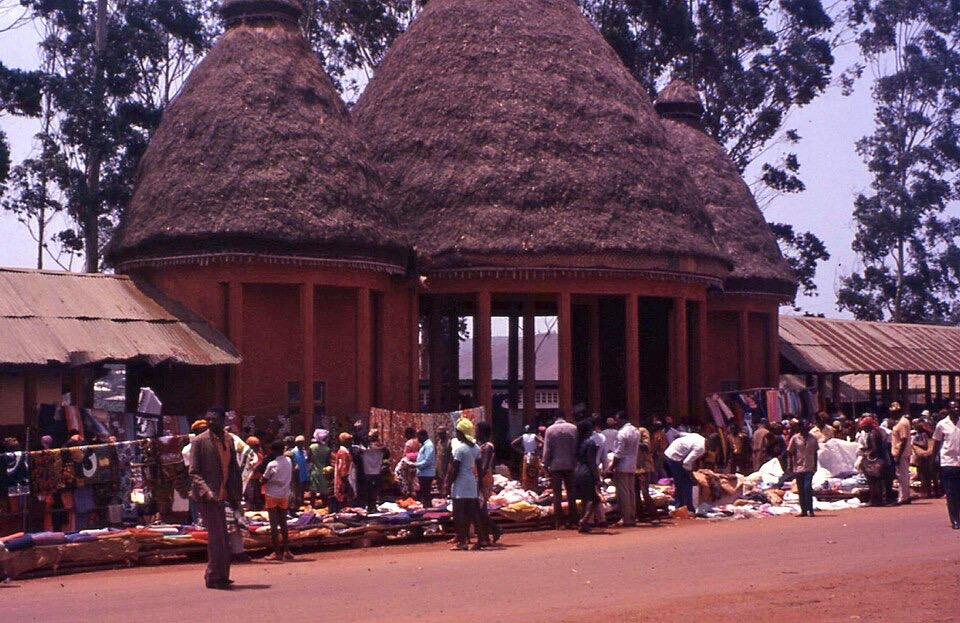
When asked about their level of trust in the accuracy of a diagnostic made using AI, the responses of the participants varied from 50 to 100%. Lack of complete trust in the diagnosis was often attributed to the fact that the system is not necessarily 100% error-free and can malfunction.
“I would say 80% in favor because a device can have problems, so we must be sure that the device is in good condition and there is also the user; does the user use it properly?” a participant said to the team. “Yes, because for example, if I am a nonprofessional and you give me this, I will take and film as I want! So, you need qualified personnel for that.”
“A risk is the protection of data of the patients mainly,” another said. “Yes! You keep them in the phone..you guarantee protection, but it is a phone. Artificial intelligence or not, once it is connected, data is no longer protected from what I know.”
In conclusion, the results suggest that an artificial intelligence-based screening tool for cervical cancer is mostly acceptable to the women in Dschang. “By ensuring patient confidentiality and by providing clear explanations, acceptance can be fostered in the community and uptake of cervical cancer screening can be improved,” the researchers explained.
6- AI : evaluating satellite data and deep learning for identifying direct deforestation drivers in Cameroon
“This study is, to our knowledge, the first attempt at automatically classifying detailed direct deforestation drivers tailored to Cameroon.”
Published in Society and Environment, this study highlights the main deforestation drivers in Cameroon. To enable supervised learning, the team of researchers first constructed a reference dataset specific to Cameroon and developed a new model, Cam-ForestNet, to test whether deep learning with optical satellite data can reliably identify direct drivers of deforestation in Cameroon.
They determined the appropriate set of classes for Cameroon and it includes degradation drivers, since they are often the first step before deforestation and impact forest properties. To identify areas within the land-cover dataset that suffered deforestation, they overlayed their shapefiles with the Global Forest Change (GFC) product.
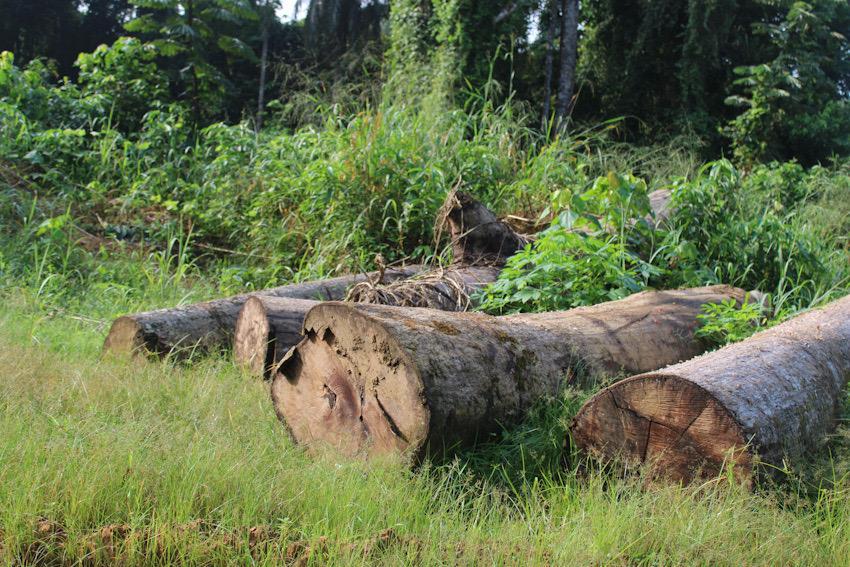
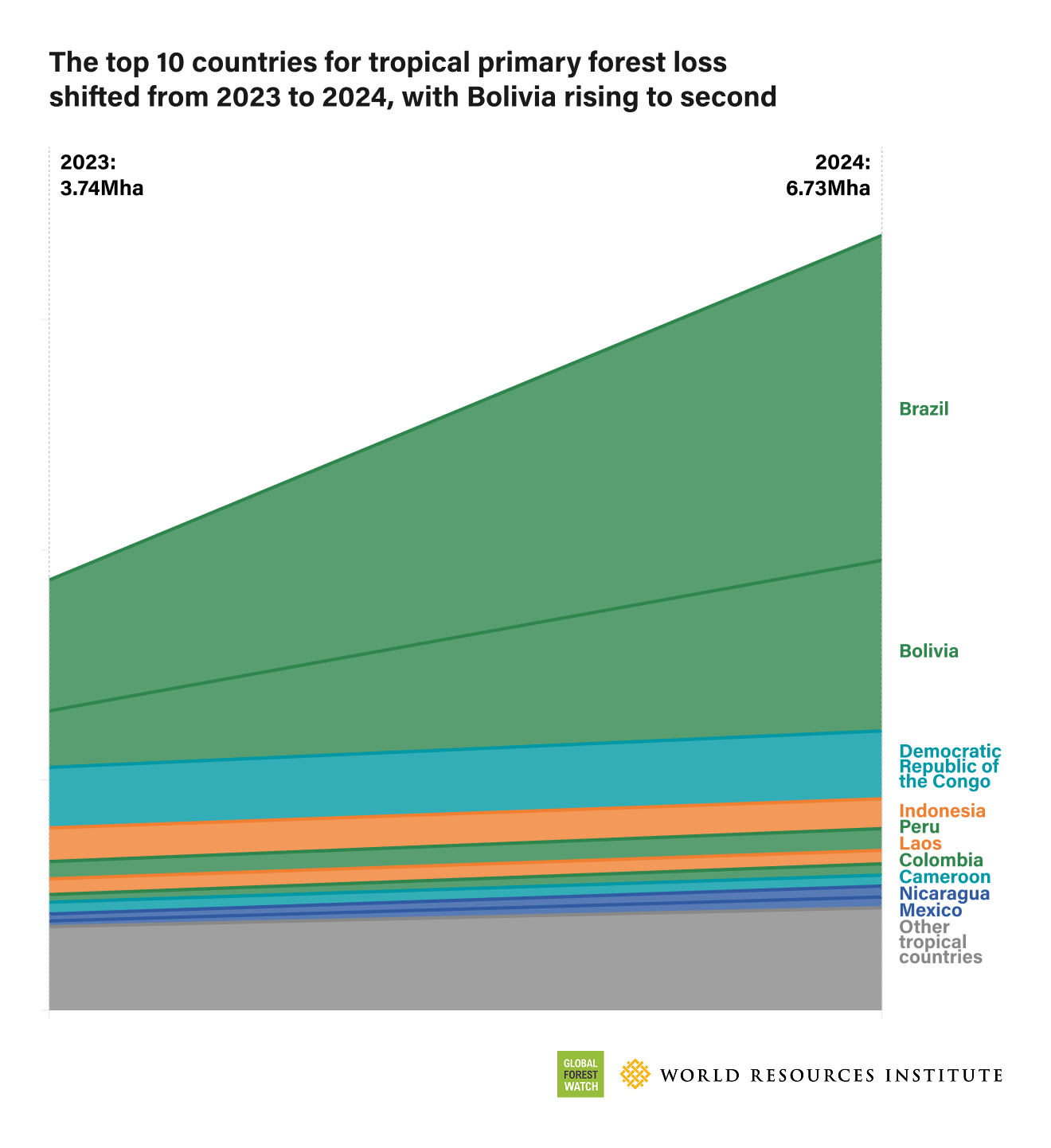
GFC consists of annual maps of tree cover loss with a 30-m resolution, and they extracted maps for each year between 2015 and 2020. They chose the time period 2015–2020 for their analyses “to take into account recent deforestation dynamics, match the general availability of ground data and include the most recent methods and satellite data used for the GFC product to limit inconsistencies.”
To rigorously test their hypothesis that deep learning with optical satellite data can reliably identify direct drivers of deforestation in Cameroon, they implemented a structured data splitting strategy. Their resultant labelled dataset, consisting of Landsat-8, NICFI PlanetScope images, and auxiliary data were then divided into training (60 %), validation (15 %), and testing (25 %) datasets by stratified sampling to maintain class balance.
They compared the effectiveness of the two types of freely available optical satellite imagery of differing spatial resolutions: Landsat-8 and NICFI PlanetScope. “Since it can be challenging to know which collections are best suited for specific applications, we tested different ones to find the optimal approach,” they wrote. “Our detailed classification strategy includes fifteen direct deforestation drivers for forest loss events taking place between 2015 and 2020.”
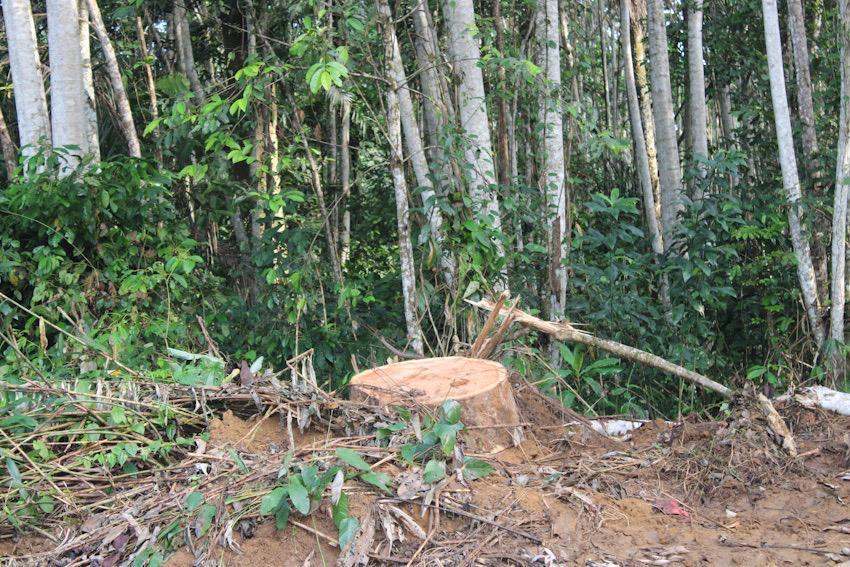
Their detailed deforestation drivers are divided in four groups. The first is plantation (large-scale): oil palm plantation, timber plantation, fruit plantation (e.g. banana), rubber plantation, other large-scale plantation (e.g. tea, sugarcane). The second group is composed of Grassland/shrubland. The third is smallholder agriculture: small-scale oil palm plantation (other small-scale plantation, small-scale maize plantation). And lastly the other group: mining, selective logging, infrastructure, wildfire, hunting, other.
“Our results show the potential of using Cam-ForestNet to monitor deforestation and prioritise interventions for organisations working on forest conservation, as well as to carry out post-event analyses to inform policy, in particular for the classes displaying a high accuracy,” the team concluded. “This model is especially useful as it displays a good performance in identifying small-scale drivers, which is usually a challenge, even with coarser-scale Landsat-8 data.”
Josiane Kouagheu
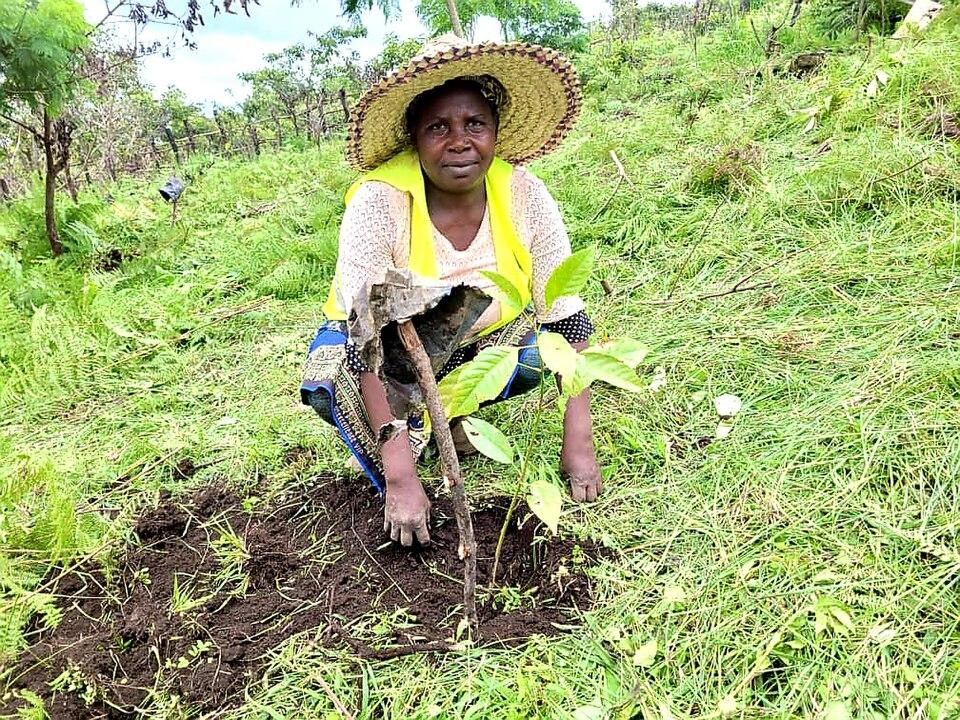
Banner Image: A rural Cameroonian woman. Image by Daya237 via Wikimedia Commons.