Improve the quality of cassava planting materials can reduce poverty in Cameroon


According to two new studies, producers who adopted quality seeds saw their probability of escaping poverty increase by 85.9%.
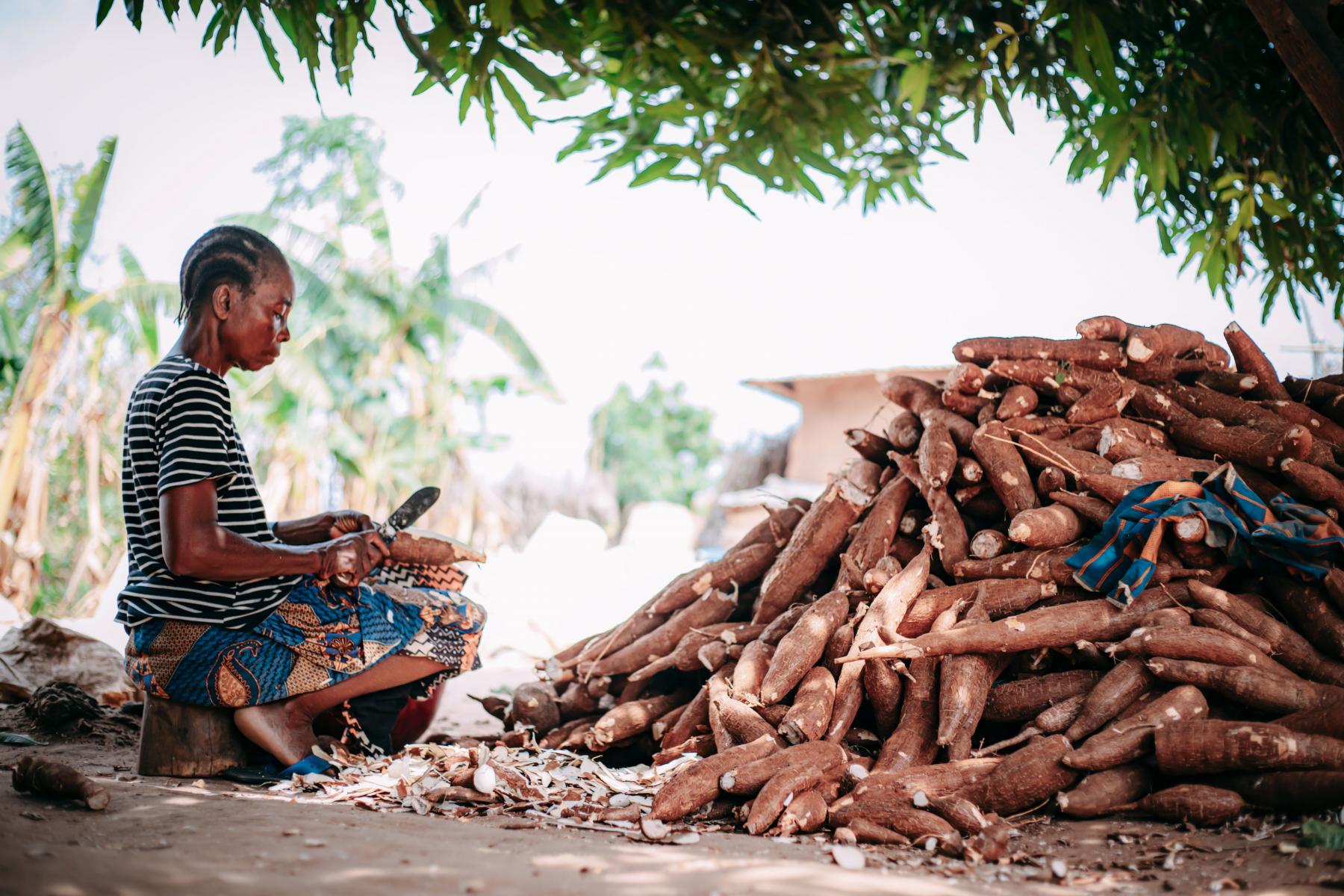
Cassava is the second largest food crop in Cameroon, after maize. It is even ranked first among the staple foods. Cameroonians consume this tuber and its derived products almost every day across the country. But, despite this fact, cassava producers are mostly poor. Even though the agroecological and edaphic conditions in Cameroon favor the expansion of cassava cultivation, the productivity remains low due to the lack of quality seeds.
However, according to two new studies published in march and may 2025 in Revue Repères et Perspectives Économiques and The Journal of Agriculture and Food Research, improved cassava quality planting materials (CQPM) can reduce poverty in Cameroon and help farmers to grow their crops.
“Producers who adopted improved cassava planting materials saw their probability of escaping poverty increase by 85.9% compared to what it would have been without adoption,” the first study found. “The analysis shows that the production of cassava quality planting materials is profitable, with a margin rate of nearly 60 %,” the second highlighted.
Informal and formal
In Cameroon, as in most developing countries, the seed system is dual. The informal or traditional seed system relies on methods of seed preservation and exchange within farmer communities. Traditional seeds are either from the previous harvest or exchanged or purchased between farmers or on the market. It is the case of cassava, whose propagation is vegetative.
On the other hand, the formal seed system revolves around varietal development through research, production, and distribution of certified seeds, ensuring the varieties’ identity, quality, and purity. The Ministry of Agriculture and Rural Development (MINADER) of Cameroon regulates seed activities through the Directorate of Regulation and Quality Control of Agricultural Inputs and Products (DRCQ). The Institute for Agricultural Research for Development (IRAD) is responsible for developing and maintaining varieties and producing basic seeds in the country.
The private sector plays a role in research through collaboration with international institutes in variety selection and pre-basic and basic seed production. Additionally, the private sector is involved in the multiplication and sale of certified seeds in compliance with seed regulations. These tasks are carried out by seed companies, farmers’ organizations, individual seed producers, and distributors approved by the State.
“Most farmers still use traditional planting materials that are vulnerable to diseases and climate stress, resulting in yields far below their potential,” Dr Paul Martin Dontsop Nguezet, a Cameroonian agricultural economist, scientist affiliated with the International Institute of Tropical Agriculture (IITA) and one of the co-authors of the study published in The Journal of Agriculture and Food Research, told Agripreneurs d’Afrique.
“Certified planting materials are scarce, and distribution systems are poorly organized. The upfront cost of improved seeds is often prohibitive for smallholders without access to subsidies or credit.”
70% interested by CQPM
In their article, their primary goal was to assess the profitability of the CQPM seed production activity. They obtained information such as the preferred type of cassava planting material, primary sources of supply, cost of production, selling prices of CQPM, and socio-demographic characteristics of producers, through surveys conducted among a sample of 264 cassava-tuber producers’ households and 42 CQPM producers which are enterprises or cooperatives specialized in the multiplication and commercialization. They also interviewed key individuals in the seed sector.
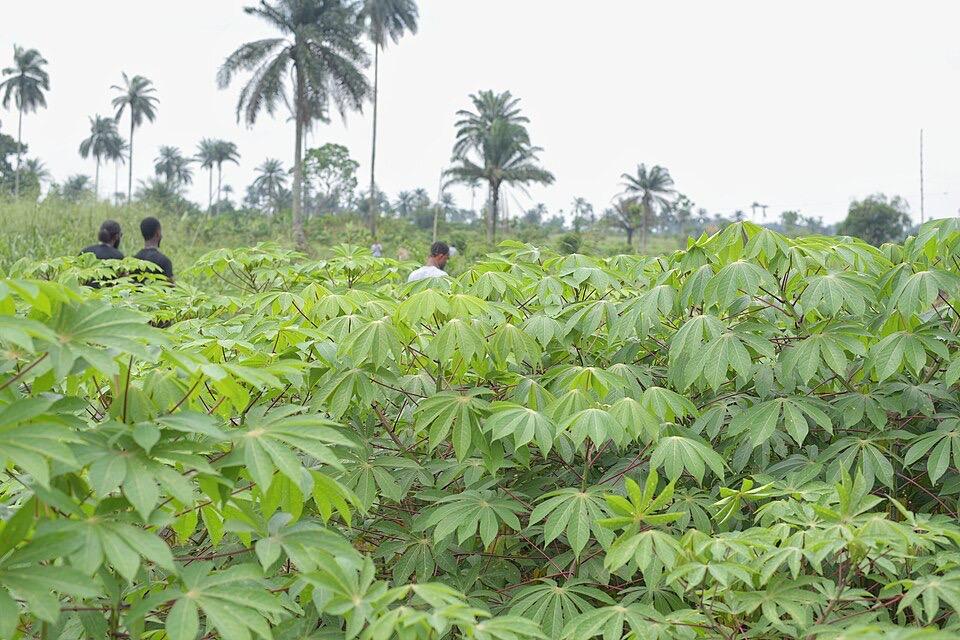
To calculate the profitability of CQPM production, the team used quantitative and qualitative models focused on multiples determinants/parameters (demand, supply, profitability..) such as gross margin, gross product, the cost per unit, operational expenses… and comparative analysis between the varieties of CQPM available from CQPM producers and those preferred and used by cassava-tuber producers households (CQPM consumers).
The analysis showed that the production of cassava quality planting materials is profitable, with a margin rate of nearly 60 %. Out of the 264 cassava-tuber producers’ household that were interviewed, the researchers noted that 184 (nearly 70 %) expressed an interest in purchasing the cassava quality planting materials. Additionally, 65 % of cassava-tuber producers stated satisfaction with the cassava planting materials they were currently used, even though they were interested in purchasing CQPM.
Traditional practices
“Poor infrastructure—especially roads and telecommunications—isolates producers, leading to informal marketing, fragmented value chains, and minimal local processing,” Nguezet said, adding that the seasonal nature of agriculture discourages financial institutions from supporting cassava farmers, limiting access to credit and modern inputs. ”Some farmers are hesitant to abandon traditional practices due to risk aversion or cultural attachment to local varieties.”
However, those who take the risk and use the CQPM win, according to the study published in Revue Repères et Perspectives Économiques. The main objective of this article was to estimate the effect of the modernization of Cassava production on the standard of living of producers in Cameroon. In their research, the scientists used data from a survey led by IITA in 2019 as part of a project called Cassava 21. From a map provided by MINADER, a sample of 1233 Cassava producers was established in four regions considered as the main cassava production basins in the country.
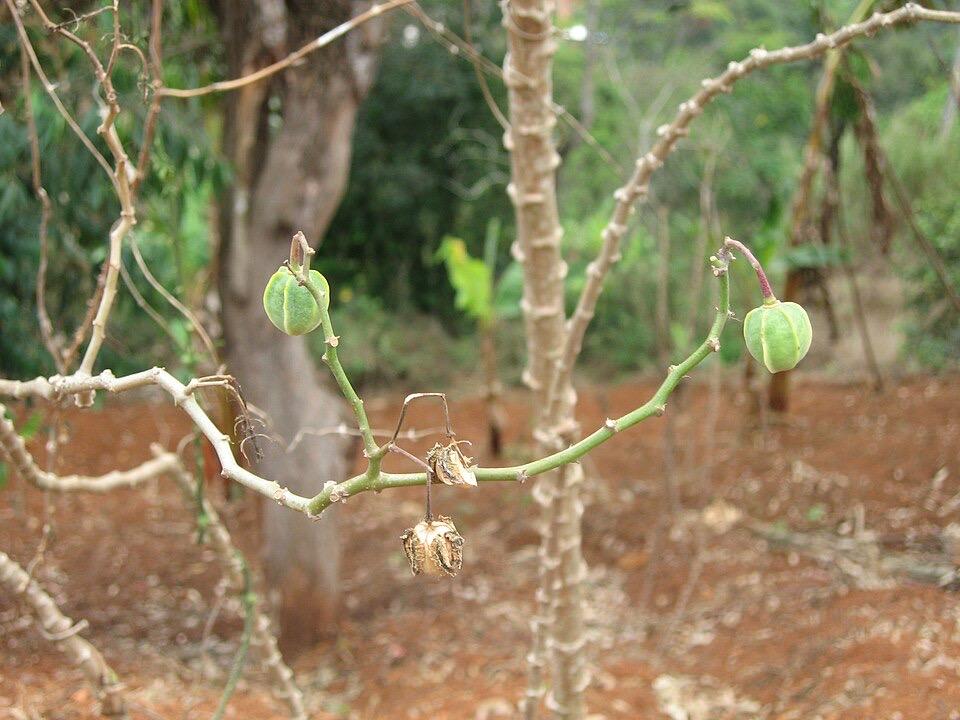
The questionnaire was used to collect information from farmers about the 2017-2018 agricultural season in relation to their socio-demographic, economic and technical characteristics. After eliminated those with missing data such as production and factors of production, the researchers worked on a sample of 1198 producers. They observed that the average yield of farmers who adopted (adopters) improved cassava planting materials is significantly higher (15,836 tons/ha) than that of non-adopters (11.06 tons/ha).
Escape poverty
They also noted that a higher percentage of adopters (90%) have access to information and Communication (ICT) compared to non-adopters (86.8%). At the same time 69% of adopters are connected to the power grid when only 49% of non-adopters are. Access to electricity and increased access to ICT can facilitate access to information and agricultural services, thus contributing to faster adoption and more effective agricultural innovations, the paper highlighted.
To determine the factors that explain the adoption of agricultural technologies, and the impact of this adoption on the standard of living of cassava producers in the country, the authors used differents models and parameters to calculate the adoption and poverty rates. The results showed that the probability that respondents could escape poverty, increased by an average of 4.8%. Adopters have seen their probability of escaping poverty increase by 85.9% compared to what it would have been without adoption.
“Thus, the slow pace of adoption does not reflect a lack of interest, but rather structural obstacles that must be addressed,” Jean Charles Ononino, a PhD student at the university of Ngaoundéré and researcher in economics and development, specialized in agricultural economics who contributed to the two studies (Revue Repères et Perspectives Économiques and The Journal of Agriculture and Food Research) told Agripreneurs d’Afrique. “In short, the issue is not merely to increase production, but rather to build an inclusive ecosystem that enables producers to fully benefit from cassava’s economic potential.”
In an article published in Frontiers in Sustainable Food Systems in 2021, a team of researchers from the department of Plant science and Crop protection of the university of Nairobi in Kenya where cassava is the second most important root crop after Irish potato, shared the same point of view. They explained that cassava production should not only be addressed on the unavailability of planting materials but all challenges across its value chain.
Recycled materials
They found for example that farmers who used tractor for land preparation, received training on cassava production, or experienced marketing challenges were about four to eight times more likely to source from a formal seed source. However, in their study, they discovered after interviewing 250 farmers that the majority (83%) recycled planting materials from the previous crop while around 67% obtained them from their neighbors. A situation that is similar to Cameroon.
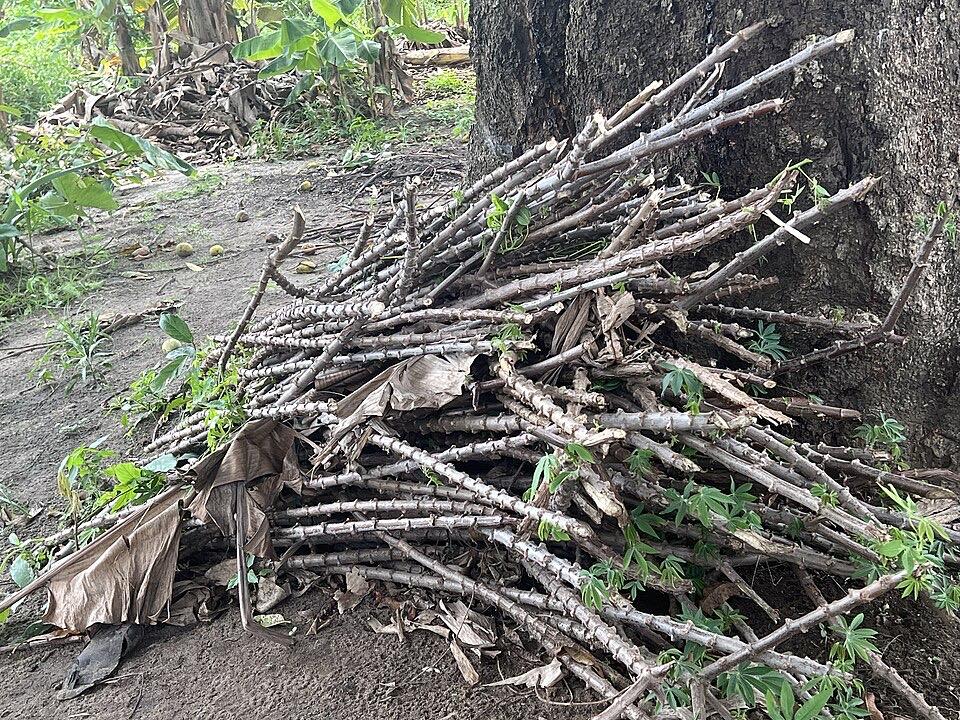
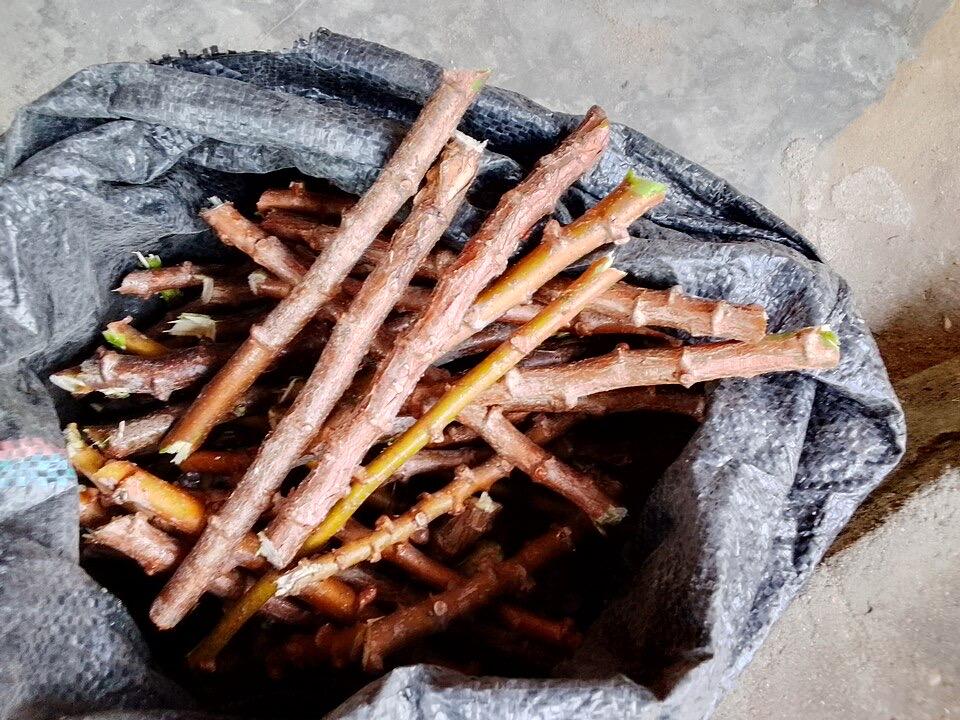
“Transforming the cassava sector into a genuine lever for poverty reduction requires acting simultaneously on several fronts,” Ononino said, recognizing that many producers are still unaware of the existence of improved cassava planting materials or their tangible benefits.
For him, strengthen the dissemination of improved planting materials through targeted subsidies, develop local processing and promote modern processing units to increase value addition (gari, flour, starch, biofuels); establish microcredit mechanisms adapted to smallholders; adapt technologies to local realities or support research and extension services by bringing innovations closer to producers can reverse the trend.
Josiane Kouagheu